The Karjat Land Rush: Four Plotted Projects, Compared Honestly
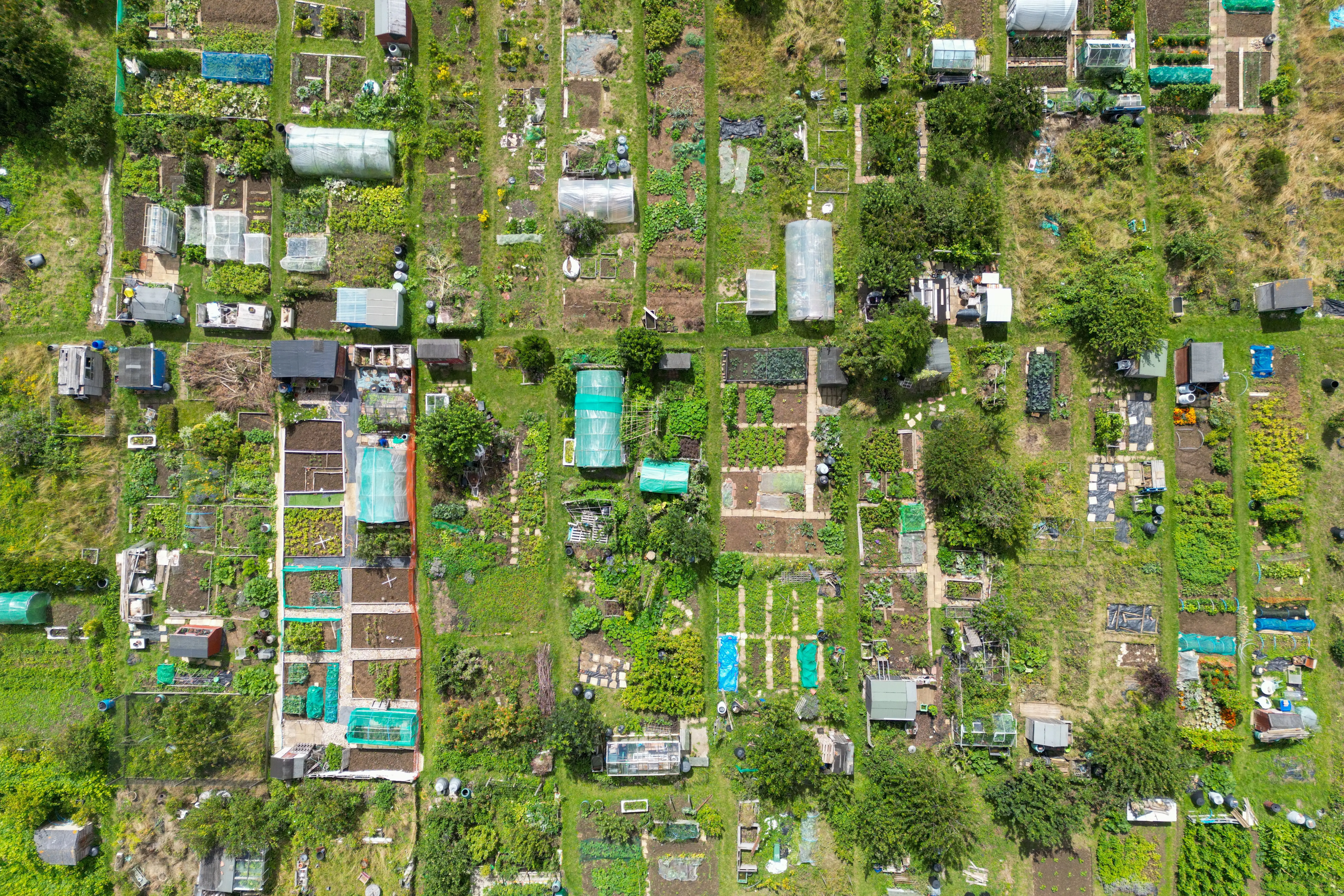
Four branded plotted projects are competing for the same Karjat buyer. They differ far more than the brochures suggest, and one number tells you most of what you need to know about how each will actually feel to live in.
Karjat has gone from farmhouse belt to one of the most contested plotted-development markets near Mumbai in about three years. Four branded projects are now chasing the same buyer, and choosing between them is harder than it looks, because they are selling genuinely different things under similar language. Here is how the best plotted projects in Karjat actually compare, with the numbers that brochures tend to bury.
A note before we start. Every figure below comes from developer disclosures and public project listings, not from independent audit. Verify each one against the MahaRERA portal and the project's own documents before you act on it.
Why everyone is suddenly here
The Karjat investment case rests on a genuine convergence of infrastructure. The Navi Mumbai International Airport began commercial operations in December 2025, roughly 40 to 45 km away. The Panvel-Karjat rail corridor was reported at around 98% physical completion in June 2026, though it is not yet carrying passengers and its opening has slipped more than once. The Atal Setu has shortened the Mumbai approach, and in May 2026 the Mumbai Metropolitan Region Development Authority (MMRDA) became Special Planning Authority for 28 Karjat revenue villages.
That is a real pipeline. It is also, by now, partly in the price. The Karjat land price trends piece covers what the per square foot ranges actually look like across belts and what is driving them.
The four contenders
Godrej Woodside Estate. The largest of the four, at around 90 acres along the Karjat-Khopoli Road at Khalapur, with roughly 1,000 plots from about 1,200 to 3,000 sq ft, a 24,000 sq ft clubhouse and a forest-themed park. MahaRERA registration: P52000077384. Worth noting that this sits in Khalapur rather than Karjat town proper, which affects commute times and the day-to-day experience differently from projects closer to the station.
Kalpataru Aria. Spread across 80-plus acres at the foothills of the Kalote-Mokashi range, positioned around wellness, with Club Solace and 21-plus nature-inspired zones. MahaRERA registration: P52000047146. Structurally it is the most mixed of the four: around 116 serviced plots from roughly Rs 88 lakh to Rs 1.26 crore, hillside townhouses from about Rs 1.95 crore, and apartments launched in a later phase. The apartment component, branded Residences at Kalpataru Aria, comprises two seven-storey towers holding 70 two-bedroom units on a 0.75-acre parcel inside the wider community, marketed as retreat-style weekend homes from roughly Rs 70 lakh. Phase one is reported sold out.
Sugee Verandas. The outlier on scale: 51 plots across roughly 6 acres off the Karjat-Khopoli Road at Varne, plots from about 2,000 to 5,400 sq ft, indicative rate around Rs 6,500 per sq ft. MahaRERA registration: PRM/KA/RERA/1251/446/PR/280222/004736.
BluBay by ORA Land (T60). A 60-acre gated hillside community with around 325 plots, a 1.2-acre lagoon and a 35,000 sq ft clubhouse, roughly 15 minutes from Karjat station. Plot tiers from about 1,248 sq ft to 5,000-plus sq ft. For context on the station belt this project sits near, the Neral and Matheran foothills neighbourhood guide covers the connectivity profile and what ownership there looks like across seasons.
For a belt-by-belt view of where each project sits within the wider Karjat geography, the micro-market map is the right starting point before you shortlist.
The clubhouse ratio: the number brochures bury
This is the figure that separates these projects more sharply than anything in the marketing material, and it is simple arithmetic. Divide clubhouse area by the number of plots that share it.
- Godrej Woodside: about 24,000 sq ft across roughly 1,000 plots. Around 24 sq ft of clubhouse per plot.
- BluBay: about 35,000 sq ft across 325 plots. Around 108 sq ft per plot.
- Sugee Verandas: about 23,000 sq ft across 51 plots. Around 450 sq ft per plot.
Sugee offers roughly four times BluBay's ratio and nearly nineteen times Godrej's. That gap shows up in ordinary weekends: whether the pool is usable on a Sunday in December, whether you can book the hall, whether the gym has equipment free at eight in the morning.
A big clubhouse is not the same as an available clubhouse. What you actually consume is your share of it.
The counterweight is that scale buys things density cannot. Godrej's 10-acre forest park, BluBay's 1.2-acre lagoon and Kalpataru's 21 zones exist because hundreds of buyers fund them. A 6-acre project cannot build a lagoon. The real question is whether you want more amenities shared with more people, or fewer that are reliably yours.
Views, privacy and density
All four sit in Sahyadri terrain with valley views, and all four will photograph beautifully. Density is where they diverge, and two different measures matter here. They do not point the same way, so it is worth separating them.
Plots per acre tells you how much elbow room a layout gives. Kalpataru Aria leads comfortably: roughly 116 serviced plots across 80-plus acres is near 1.5 per acre. BluBay follows at around 5.4, Sugee Verandas at about 8.5, Godrej at roughly 11. On layout spaciousness alone, Kalpataru is the most generous and Sugee sits mid-pack.
Total households tells you how many people you will actually encounter, and the order changes completely. Sugee is 51 households, full stop. BluBay is around 325, Godrej close to a thousand. Kalpataru combines its 116 plots with 70 apartments and a townhouse cluster, so its community is several times larger than the plot count suggests.
That apartment component deserves a pause if privacy is your reason for buying. Two seven-storey towers inside a plotted township is a different proposition from an all-plotted scheme: it concentrates households vertically, it means overlooking, and it adds a short-stay population that plot owners do not control. That is not a defect. It widens the buyer base and helps fund the amenities. But a buyer choosing Aria for spaciousness should know what else is going into those 80 acres.
Scale brings real advantages regardless: a service ecosystem, easier resale comparables, neighbours in the off-season. It also shapes the build phase. In a large township, construction continues around you for years. A 51-plot scheme finishes sooner and stays finished. The total cost of ownership model does not capture construction noise as a line item, but years of activity next door are a real cost that belongs in any honest assessment.
Developer track record
All four developers are established or backed enough to be credible. What differs is what they optimise for.
Godrej Properties and Kalpataru are listed, large-format developers with deep balance sheets and standardised processes. That brings financing, delivery capacity and brand-driven resale liquidity, at the cost of a more procedural and less personal experience. Sugee Group is a Mumbai developer of about four decades, citing 28 completed projects, 32 ongoing developments and more than 1,000 homeowners: a smaller, boutique operation. ORA Land is a newer entrant building at ambitious scale, with heavy emphasis in its own material on NA conversion and clear title.
Rather than take any of this on trust, do the check yourself. How to verify a developer's track record covers the MahaRERA method, and it applies equally to a listed giant and a boutique firm.
Project phase and what you are paying for
There is a common assumption that the biggest brand will also be the cheapest entry, because large townships launch at keen introductory pricing. In this set, that assumption no longer holds, and it is the single most important correction to make before comparing prices.
Godrej Woodside is in the final phase of its sell-down, with only a limited number of plots remaining. That inverts the usual logic. You are not buying at an introductory price with a wait ahead of you. You are buying last-available inventory in a nearly sold-out scheme, which typically transacts at a premium to earlier phases, and where remaining plots are often those the market passed over first, whether for orientation, gradient or position within the layout.
That premium buys something real. A late-phase project has visible, largely delivered infrastructure. You can walk the roads, see the clubhouse, meet residents and judge the developer on evidence rather than a brochure. Delivery risk is much lower than it was for a phase-one buyer. What you give up is the appreciation that phase-one buyer captured. Kalpataru Aria sits in a comparable position, with phase one reported sold out.
Sugee Verandas and BluBay are further back in their cycles, both RERA-registered with infrastructure still developing. More build-out ahead of you, more of the appreciation curve unclaimed, in exchange for execution risk the late-phase Godrej buyer has already had resolved.
The trade-off is not early versus late. It is whether you pay a scarcity premium for proof, or accept execution risk for a lower entry. On the fixed closing costs that apply regardless of which project you choose, stamp duty and registration in Maharashtra breaks down what you pay at the Sub-Registrar.
Who each project is really for
Choose Godrej Woodside if you want the largest brand name, the widest amenity spread and a full township ecosystem you can inspect before buying, and you are comfortable paying a last-phase premium and living among roughly a thousand households. Check which plots are actually left before you fall for the master plan.
Choose Kalpataru Aria if the wellness-led master plan and a listed developer's balance sheet matter most, and you want the most generous plot-to-acre ratio of the four. Go in knowing the community includes 70 apartments and a townhouse cluster alongside the plots, so it will feel busier than 116 plots on 80 acres suggests.
Choose BluBay by ORA Land if you want resort-scale amenities, including the lagoon, at moderate density, and proximity to Karjat station matters for regular use. Be comfortable backing a newer developer at scale.
Choose Sugee Verandas if privacy is the actual reason you are buying. Fifty-one plots on six acres, with around 450 sq ft of clubhouse per plot, is the closest thing in this set to a private club. You give up the lagoon and the forest park. You get a scheme that will feel finished sooner and quieter permanently.
The honest verdict
There is no single best project here, and anyone telling you otherwise is selling one of them.
What there is, is a clear split. If you are optimising for amenity breadth, brand liquidity and visible infrastructure, the large townships win, and Godrej wins on scale. If you are optimising for privacy and for actually being able to use what you paid for, Sugee Verandas wins on the arithmetic, and it is not close.
Most people who buy in Karjat say they want peace and quiet. If that is genuinely your reason, buy the number that delivers it rather than the brochure that promises it.
If you are still deciding whether Karjat is the right market before you compare specific projects, the Karjat destination guide covers geography, connectivity and what ownership here looks like across seasons. When you are ready to look at what is available, browse current Karjat listings on Avacasa.
The diligence: unchanged regardless of which project you choose
Whichever way you lean, the due diligence does not change. A branded project does not remove the need for it: it changes which documents you are checking, not whether you check them.
Confirm what NA status actually means and verify the recorded conversion in the revenue records. Trace title over 30 years using a local Raigad lawyer rather than the developer's recommended panel. Pull the encumbrance certificate from the Sub-Registrar independently. Confirm the access road is a legal right of way, not an informal track. And walk the site in the monsoon, using the site visit checklist. A plot you have only seen in December has told you half the story.
10 questions to ask before signing a land deal is a useful pre-commitment checklist you can work through before handing over any token amount. The full process from booking to registration is in the step-by-step guide to buying an NA plot.
For the due diligence steps a branded project does not skip, see 10 red flags that should make you walk away and how to read a 7/12 extract.
Sources
- Sugee Verandas official project site
- Sugee Verandas plotted development, Karjat (Gupta Sen)
- Godrej Woodside Estate Karjat project overview (Housiey)
- Kalpataru Aria, Raigad (Kalpataru)
- Kalpataru Aria Karjat project details and Residences launch (99acres)
- Kalpataru Aria Residences, Karjat (Homebazaar)
- Kalpataru Aria serviced plots, phase one sold out (Gupta Sen)
- NA plots in Karjat, ORA Land T60 (ORA)
- Panvel-Karjat rail corridor 98% complete (Free Press Journal)
Ready to find your next holiday home?
Browse our curated collection of vacation homes and managed farmland across India and beyond.