Total Cost of Ownership: NA Plot vs Agricultural Land Over 10 Years
The sticker price is the least interesting number in a land deal. What decides whether a purchase was smart is the cost of owning it in Karjat over the years that follow, and that is where an NA plot and an agricultural parcel diverge sharply.
Here is the ten-year picture for both. If you are still deciding between the two routes, NA plot vs agricultural land: which should you actually buy? covers the decision logic before you model the numbers. For the investment context, see is Karjat a good investment in 2026.
All figures below are illustrative ranges based on published market data and current Maharashtra rules. Your actual numbers will vary by plot, belt and builder, so treat this as a framework for your own spreadsheet rather than a quote.
The two scenarios
To compare like with like, assume a buyer with a similar budget and a ten-year horizon.
Scenario A: a gated NA plot. Roughly 2,000 sq ft in an organised layout in a belt like Kashele, at around Rs 700 psf, so about Rs 14 lakh for the land. Legally buildable from day one.
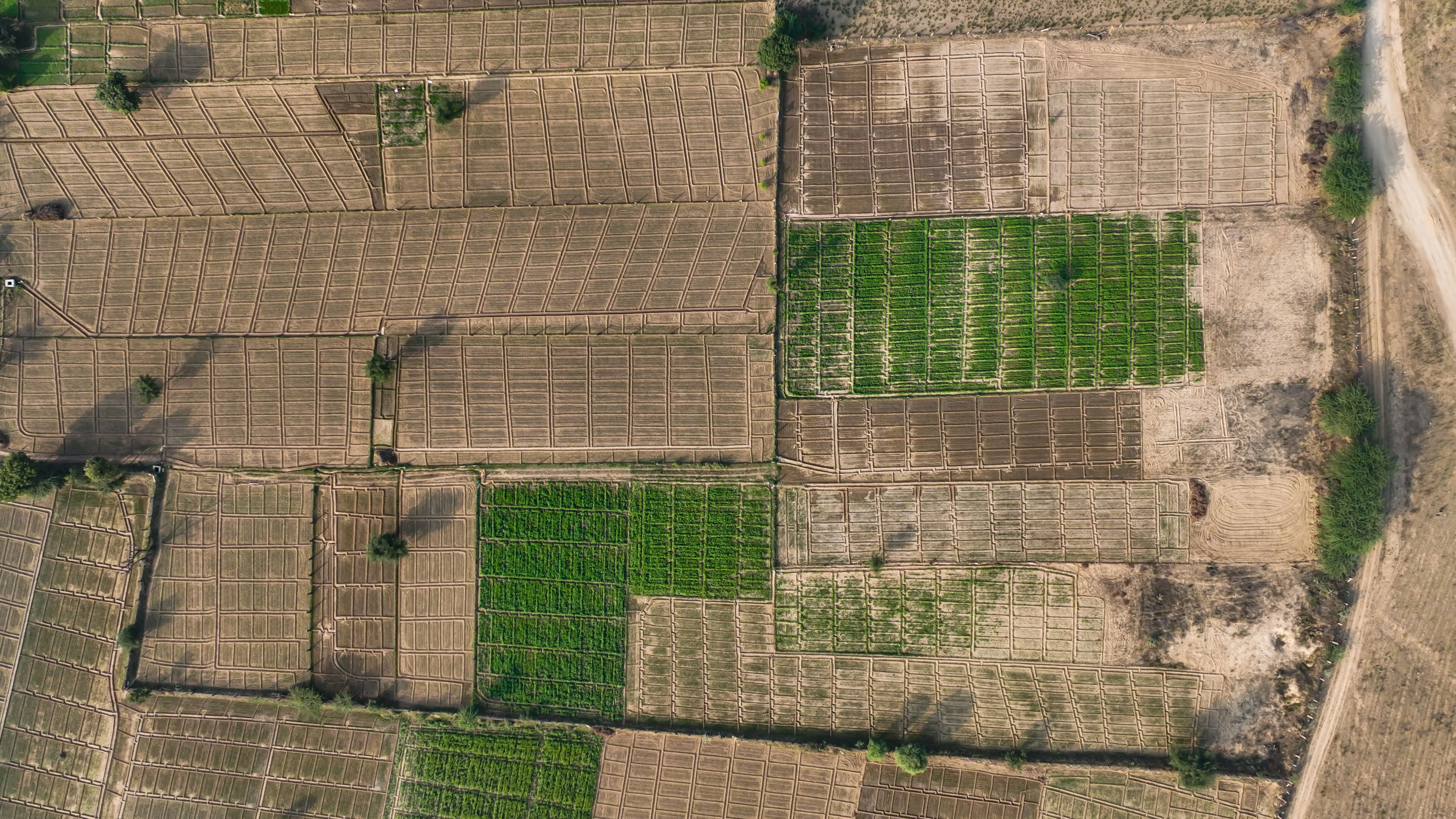
Scenario B: an agricultural parcel. Roughly 1 acre (40 guntha, about 43,560 sq ft) on Tata Road at around Rs 350 psf, so about Rs 15 lakh. Far more land for the same money, and that is exactly the appeal.
Same money in, very different journeys.
Year zero: what you pay at closing
Both scenarios carry acquisition costs beyond the land itself.
- Stamp duty: in rural Raigad (Gram Panchayat areas), roughly 3 to 4% of value, plus a 1% Zilla Parishad cess. On a Rs 15 lakh parcel, budget around Rs 60,000 to Rs 75,000. Note that duty is charged on the higher of your agreement value or the Ready Reckoner value. For the full breakdown, see stamp duty and registration in Maharashtra.
- Registration: 1% of value, capped at Rs 30,000 for properties above Rs 30 lakh.
- Legal and title work: a proper 30-year title trace, encumbrance search and document vetting. Budget Rs 25,000 to Rs 75,000. This is the cheapest insurance you will ever buy.
- Brokerage, where applicable.
So far the two look similar. Then they part ways.
The conversion cost, and the good news
If you buy agricultural land and want to build, you need it converted to non-agricultural use. This used to be a long, expensive haul through the Collector's office.
Maharashtra changed that. Under the Land Revenue Code (Second Amendment) Act, 2025, in force from 31 December 2025 and given effect by a government resolution in February 2026, separate NA permission from the Collector is no longer required where non-agricultural use is already permitted under the Development Plan or Regional Plan. The sanad requirement is gone in those cases, and the old recurring annual NA assessment has been replaced with a one-time premium under the revised Section 47, charged on the Annual Statement of Rates market value at slab rates: 0.1% for land up to 1,000 sq m, 0.25% between 1,000 and 4,000 sq m, and 0.5% above 4,000 sq m.
That is a genuine improvement, and it lowers the cost of the agricultural route. But read the conditions carefully. The simplification applies where a plan permits NA use. Karjat only got MMRDA as its Special Planning Authority in May 2026, and the development plan has not been published yet. Until it is, the position for many parcels is genuinely uncertain. Occupancy class also still matters: Class II land keeps its restrictions regardless.
Budget for conversion cost, professional fees, and above all time. The full process is in converting agricultural land to NA.
The NA plot buyer skips all of this. That is what the higher price per square foot is buying.
The cost of waiting
This is the line item nobody puts in a spreadsheet, and it is often the largest.
If conversion takes a year, or two, or does not come through at all, you are holding capital in an asset you cannot build on, cannot easily borrow against, and can only sell to a narrower pool of buyers. Meanwhile the NA buyer could have built, used, or rented the property.
Put a number on it. On Rs 15 lakh, even a modest 7% opportunity cost is over Rs 1 lakh a year. Two years of conversion limbo is Rs 2 lakh of nothing.
Financing
Banks and housing finance companies lend readily against clear-title NA residential plots. They are far more reluctant on pure agricultural land, and construction on unconverted agricultural land cannot be financed at all. If you plan to use leverage, the NA route is not just easier, it is often the only route. See financing a plot.
Annual holding costs over ten years
The NA plot
- Property tax to the gram panchayat, modest but recurring.
- Maintenance or society charges in a gated layout. This is the real recurring cost, and it buys roads, security, water and upkeep.
- Fencing, a water source and a power connection if the layout does not provide them. See developing your plot after buying.
- Once built, upkeep on a hillside home in heavy-monsoon country is not trivial. Damp, drainage and access all cost money every year.
The agricultural parcel
- Lower land revenue while it stays agricultural.
- But you now own an acre, and an acre needs watching. Fencing a large perimeter, clearing vegetation, and guarding against encroachment are real costs. Unattended land in a hot market is an invitation.
- No society, no shared services. Everything is yours to arrange.
- The one-time conversion premium when you eventually convert.
The counterintuitive result: the "cheap" option often has higher absolute upkeep, because you own five to twenty times more land, and none of it is serviced.
At exit
The NA plot sells to anyone. Resale demand is broad, financing is available to your buyer, and price discovery is easier because comparable transactions exist.
The agricultural parcel sells to a narrower pool: other agriculturists, or buyers willing to take on conversion themselves. Fewer buyers means longer timelines and weaker negotiating position, however much the land has appreciated on paper.
Both attract capital gains tax on sale. Long-term gains, on property held more than 24 months, are currently taxed at 12.5% without indexation. See capital gains tax on selling land.
Over ten years, the NA plot usually costs more to buy and less to own. The agricultural parcel costs less to buy and more to carry, in money, in time, and in uncertainty.
So how should you decide?
Run your own version of this, and be honest about four inputs.
- Your build horizon. If you want to build within two years, the NA route almost always wins.
- Your eligibility. If you are not an agriculturist, Section 63 of the Maharashtra Tenancy Act restricts you from buying agricultural land in the first place. See can a non-farmer buy agricultural land.
- Your appetite for process. Conversion is simpler than it was, but it is not automatic, and Karjat's planning framework is still being written.
- Your opportunity cost. Put a real number on the years your capital sits idle.
If the agricultural parcel still looks better after you have costed conversion, the waiting, the fencing and the narrower exit, then it is genuinely the better buy for you. If it only looks better on the sticker price, it is not.
Before you commit to either route, run through 10 questions to ask before signing a land deal as a final pre-commitment check. Browse Avacasa's Karjat listings for verified plots with confirmed classification status.
Sources
- Simplifying land conversion in Maharashtra: the 2025 Amendment Act (Cyril Amarchand Blogs)
- New GR for NA land in Maharashtra, February 2026 (Nityam Legal)
- Stamp duty and registration charges in Maharashtra 2026 (ClearTax)
- How much does an NA plot cost in Karjat (ORA Group)
Ready to find your next holiday home?
Browse our curated collection of vacation homes and managed farmland across India and beyond.