Converting Agricultural Land to NA: Process, Cost & Timeline
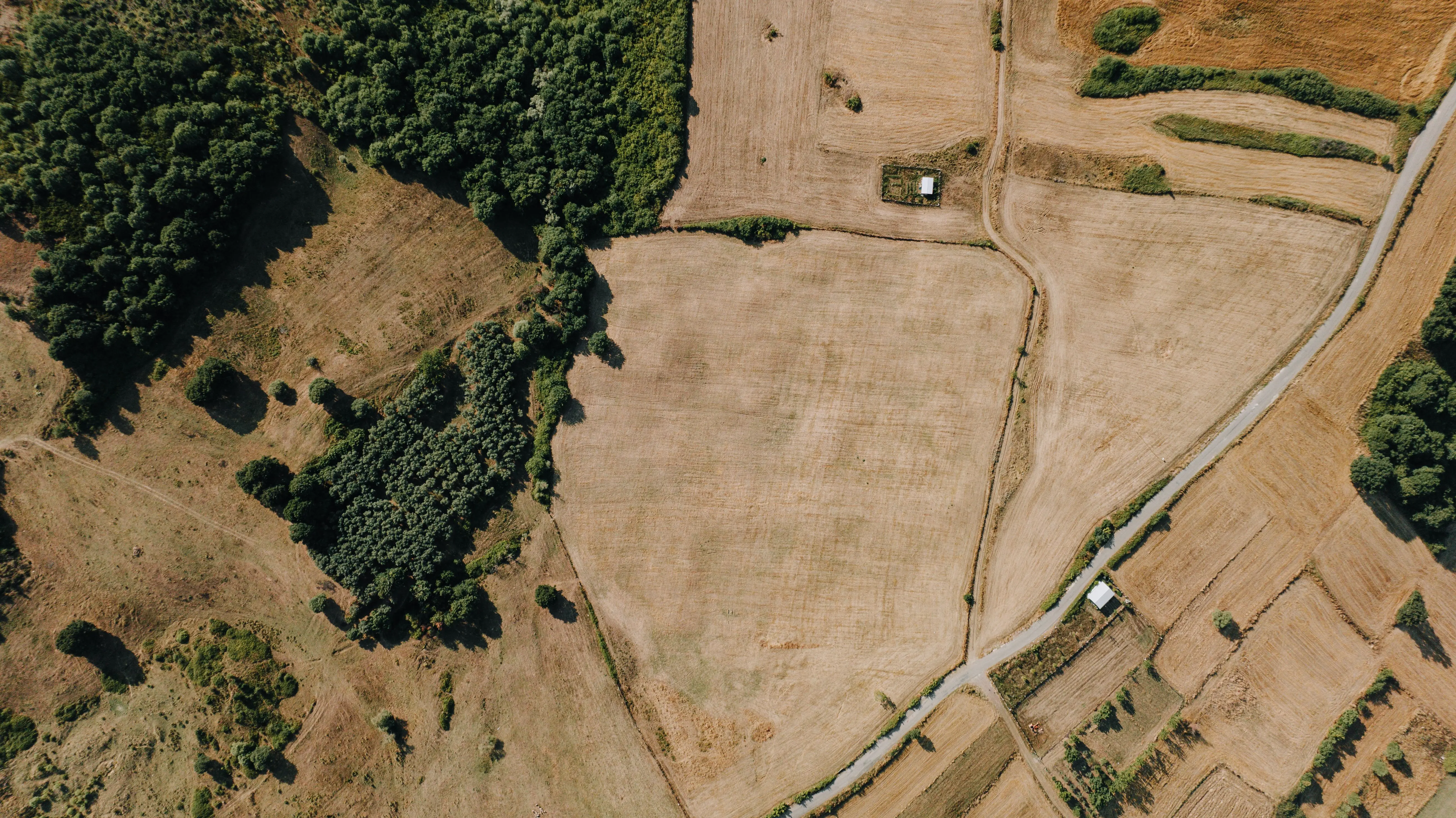
Converting agricultural land to NA in Maharashtra used to be one of the most tedious processes in Indian real estate. At the end of 2025 the state rewrote the rules, and much of the old machinery is gone.
If you are working from a guide written before 2026, you are working from the wrong law. Here is what changed, what the process looks like now, and where the catch still is for Karjat buyers. For the market context that determines whether conversion is worth the cost, see is Karjat a good investment in 2026. For why the NA vs agricultural distinction matters so much to price and buildability, what "non-agricultural (NA)" land status really means is worth reading first.
What used to happen
Under the old framework, using agricultural land for a non-agricultural purpose meant applying to the Collector for permission. You submitted the application with your 7/12 extract, layout plan and a stack of no-objection certificates. The Tahsildar checked revenue clearance. There was a site inspection. If it was approved, you received an NA order and then a sanad, the formal title to use the land for that purpose, and from then on you paid an annual non-agricultural assessment.
Meanwhile, if you wanted to build, you also had to go to the planning authority for development permission. Two authorities, scrutinising the same change of use, in parallel. It was slow, and the delays were legendary.
What changed at the end of 2025
The Maharashtra Land Revenue Code (Second Amendment) Act, 2025 was assented to on 31 December 2025, and a government resolution dated 10 February 2026 set out how it is to be implemented. The reform is substantial.
Collector's permission is no longer required where the non-agricultural use is already permitted under the draft or final Development Plan or Regional Plan under the MRTP Act, or under the applicable development control regulations.
The sanad requirement has been abolished in those cases.
Planning authorities now grant development permission directly. Development permission itself is treated as evidence of conversion, and revenue records are updated automatically once permission is granted and the premium paid. This is a genuine single-window mechanism.
The annual NA assessment is gone. In its place, the revised Section 47 provides for a one-time premium.
Several sections of the old Code, including 44, 44A, 45, 46 and 47A, have been repealed. In short, Maharashtra has moved from a permission-based system to something closer to a notification-based one.
What conversion costs now
The one-time premium is calculated on the market value of the land as reflected in the Annual Statement of Rates (the ready reckoner), at slab rates by plot size:
- 0.1% of market value for land up to 1,000 sq m
- 0.25% for land between 1,000 and 4,000 sq m
- 0.5% for land above 4,000 sq m
For land converted on or before 31 December 2001, the premium is computed on the 2001 ASR value.
Alongside the premium, budget for development charges, professional fees, and the ordinary costs of getting a layout and building plan approved. Property tax and other statutory levies continue to apply. The premium is paid to the Revenue Department through the GRAS portal.
You will also pay stamp duty on the new NA classification at registration. See stamp duty and registration in Maharashtra for the current rates.
Compared with the old regime of conversion charges plus a recurring annual assessment, this is both cheaper and far more predictable.
The process, as it stands
- Confirm what the plan says. The whole reform turns on whether NA use is permitted for your parcel under the Development Plan or Regional Plan. This is the first thing to establish, not the last.
- Apply to the planning authority for development permission under Section 18 of the MRTP Act. Which authority depends on where the land sits: municipal corporation, municipal council, nagar panchayat, or a special planning authority.
- File online through the Building Permission Management System (BPMS) or Auto DCR where available. Offline where it is not.
- Pay the one-time premium through GRAS.
- Development permission is granted, and the conversion is recorded in the revenue records, including the digital 7/12. No separate NA permission or sanad is needed.
- Verify the record. Pull a digitally signed 7/12 from the Mahabhulekh portal and confirm the conversion appears with a matching mutation entry. If it is not on the record, it has not happened. See how to read a 7/12 extract.
Where the catch still is, especially in Karjat
This is the part the celebratory headlines skip.
The simplification applies where a plan permits NA use. If your parcel sits in an area with no sanctioned development or regional plan, or where the plan does not permit NA use, you are not in the easy lane. Clarifications for unplanned areas were still awaited as this was written.
Karjat's plan is not published yet. MMRDA was appointed Special Planning Authority for 28 Karjat revenue villages only on 19 May 2026. A development plan will follow, but until it does, the position for many parcels is genuinely uncertain. That uncertainty cuts both ways: your land might be zoned for residential use, or it might not.
Occupancy class still binds. The new Section 42 makes clear that occupancy status other than Class I is not altered merely because development permission is granted. If your 7/12 shows Class II, its restrictions survive the reform.
Not all land can be converted, ever. Eco-sensitive zones, forest land, green and no-development zones, and land near reservoirs remain restricted. Parts of the Karjat belt sit close to the Western Ghats, and that matters. For the full picture on which environmental designations block conversion in the Karjat belt, CRZ, forest and green-belt rules every buyer must know covers the restrictions in detail.
Do not build first. Construction on unconverted agricultural land remains illegal, and remains liable to demolition orders and penalties. Banks will not lend against it, and you will not get water and power connections.
The reform makes conversion cheaper and faster where a plan permits the use. It does not make conversion a formality, and in a taluka whose development plan has not yet been written, that distinction is everything.
What this means if you are buying now
If you are choosing between an agricultural parcel and a ready NA plot in Karjat, the reform narrows the gap but does not close it. An agricultural parcel is cheaper and the conversion route is now more tractable, but you are still taking on planning risk in a market whose plan is being drawn as we speak. A residential NA plot in an approved layout carries none of that.
Weigh it properly with the ten-year total cost of ownership comparison, and settle the underlying choice in NA plot vs agricultural land. If you are not an agriculturist, check first whether you can legally buy the parcel at all: see can a non-farmer buy agricultural land.
Before you commit, run through 10 questions to ask before signing a land deal as a final pre-commitment check.
This is general information rather than legal advice. The framework changed recently, rules are still being aligned, and your parcel's position depends on facts specific to it. Take a local property lawyer through your particular survey number before you commit. Browse Avacasa's Karjat listings for verified plots with confirmed classification status.
Sources
- Simplifying land conversion in Maharashtra: the Second Amendment Act 2025 (Cyril Amarchand Blogs)
- Strategic land conversion: agricultural to non-agricultural use (S&R Associates)
- New GR for NA land in Maharashtra, 10 February 2026 (Nityam Legal)
- Maharashtra land conversion reform introduces one-time premium (King Stubb & Kasiva)
Ready to find your next holiday home?
Browse our curated collection of vacation homes and managed farmland across India and beyond.