Karjat Land Price Trends and What's Driving Them
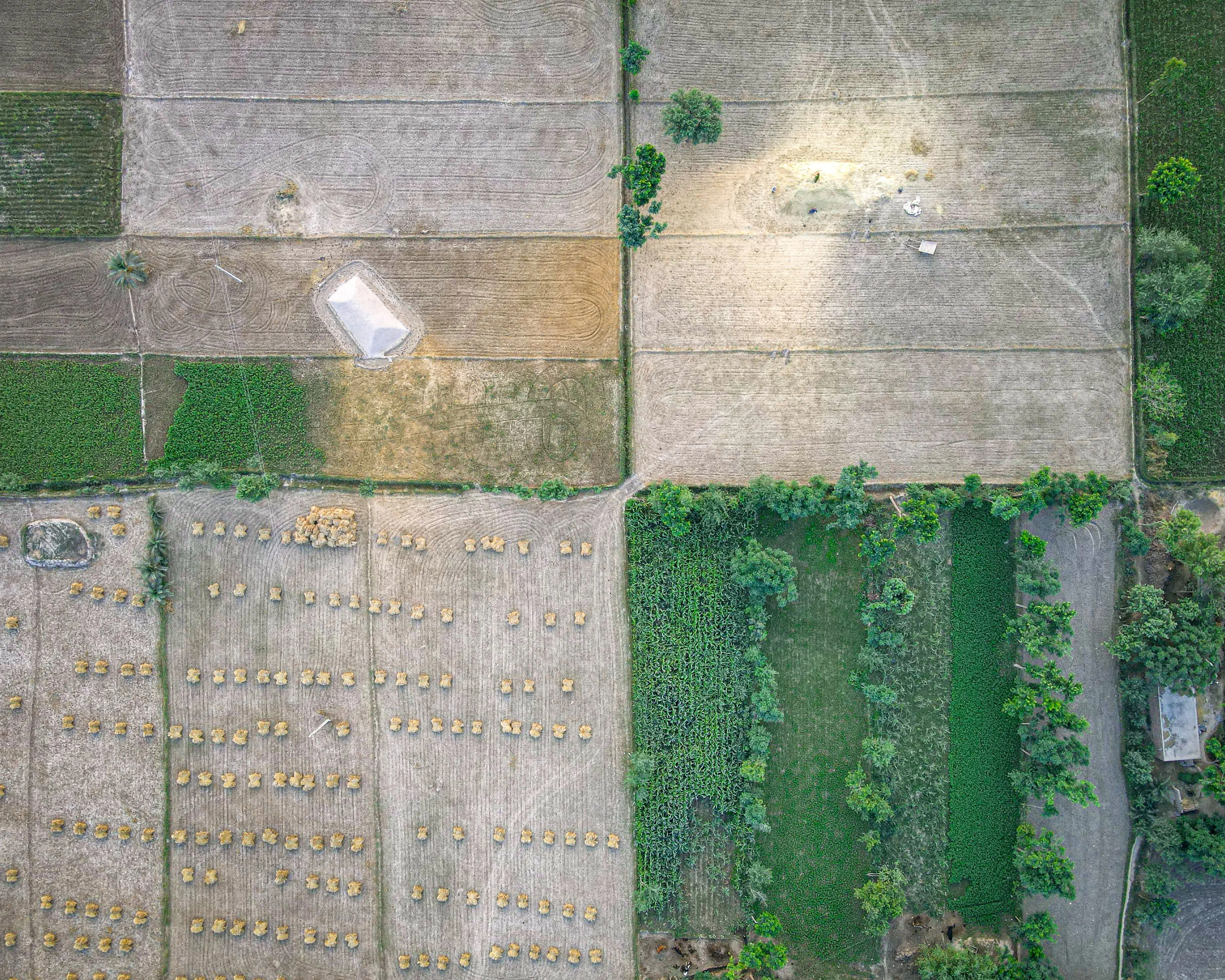
Ask three people about Karjat land price trends and you will get three different numbers. That is not because anyone is lying. It is because Karjat land trades anywhere from a few hundred rupees per square foot to over Rs 7,000, and the average tells you almost nothing.
Understanding what drives that spread is how you avoid overpaying. For the broader investment case that sits behind these numbers, see is Karjat a good investment in 2026. If you are new to the destination, the Karjat location guide gives you the geography and character of the market before you interpret pricing.
What land actually costs in Karjat right now
Here is the range as it stands in mid-2026, drawn from regional listing data and advisory firms.
- Organised, gated NA plots in premium managed communities: roughly Rs 5,500 to Rs 7,500 per square foot (psf).
- NA plots near Neral station: roughly Rs 800 to Rs 1,200 psf.
- Kashele NA plots: roughly Rs 650 to Rs 900 psf, with river-touch parcels reaching toward Rs 1,500 psf.
- Tata Road farmhouse land, largely agricultural: roughly Rs 300 to Rs 400 psf.
- General land listings across the taluka: commonly quoted between Rs 800 and Rs 2,500 psf.
Plot listings typically run from about Rs 16.5 lakh to Rs 1.5 crore depending on size, approvals and location. For context, a budget of around Rs 1.10 crore buys a sizeable gated NA plot in Karjat. The same money in Lonavala, where residential rates sit around Rs 12,000 to Rs 13,000 psf, buys considerably less.
Why the spread is so wide
Three things explain most of the difference between a Rs 400 plot and a Rs 6,000 one.
Legal status does the heaviest lifting. An NA-sanctioned plot inside an approved layout can cost five to ten times what an agricultural parcel costs half a kilometre away. You are not paying for the soil. You are paying for the right to build, the ability to get a loan, and a resale market that includes everyone rather than only registered agriculturists. If that distinction is new to you, start with NA plot vs agricultural land.
Connectivity. Minutes to a station or a highway show up directly in the price. Plots near Neral station and around Chowk, close to the Expressway, carry a premium that plots deeper into the interior do not.
Water and setting. River-touch land and plots with assured water command a clear premium. In some riverside pockets, agricultural land is quoted from around Rs 1.75 lakh per guntha upward. One guntha is 1,089 sq ft.
Amenities layer on top of all three. A gated layout with roads, power, security and maintenance is a different product from a bare parcel, and it is priced like one.
What is pushing prices up
The demand story is real, and it rests on more than sentiment.
Infrastructure is converging on the same few years. The Navi Mumbai International Airport began commercial operations in December 2025, roughly 40 to 45 km away. The Panvel-Karjat suburban rail corridor is in its final stage, reported at around 98% physical completion in June 2026, though it is not yet carrying passengers and its opening has slipped more than once. The Atal Setu has already shortened the Mumbai approach. The JNPA to Chowk highway is sanctioned. The Poshir water project, a roughly Rs 6,394 crore dam, addresses a genuine regional water gap. For a full analysis of what that project means for specific micro-markets, read the Panvel-Karjat rail line and what it means for buyers.
Institutional planning arrived in May 2026. On 19 May 2026, MMRDA was appointed Special Planning Authority for 28 revenue villages in Karjat. That is a meaningful signal. It points toward a published development plan, formal zoning, and a shift away from unplanned sprawl. It also means the rules for what can be built where will become clearer, and clarity tends to be priced.
The second-home shift is structural, not seasonal. Hybrid work, a preference for space, and the sheer cost of Mumbai apartments have moved buyers from holidaying in Karjat to owning there.
Bigger players are showing up. Organised developers have picked up large parcels in the belt for plotted and villa projects, and high-value land deals in Karjat now attract press coverage. Institutional interest is usually a lagging indicator of a market that has already turned, not a leading one.
What the appreciation numbers really tell you
You will see claims of 12 to 20% compound annual growth in premium pockets, and projections of 25 to 30% appreciation over three to five years. Treat these carefully, for three reasons.
First, almost all of them come from developers, brokers or advisory firms with something to sell. Second, there is no official Karjat land index to check them against, unlike listed equities or even ready reckoner rates for apartments. Third, and most important, a strong recent run means some of the infrastructure upside is already in today's asking prices. You are not buying ahead of the news any more. You are buying alongside it.
A more defensible expectation: meaningful appreciation over a five-year-plus hold, driven by infrastructure that actually gets delivered. Not a quick double.
The honest way to underwrite this is to stress-test it. Ask what the return looks like if only the rail line opens and nothing else lands on time. Ask what happens if roads improve but demand cools. Ask what happens if your specific plot is not in the pocket buyers end up wanting. If the numbers still work, you have a real investment. If they only work in the best case, you have a bet.
If you are weighing land against other property types, land vs apartments: the better long-term asset? puts the comparison in context.
What could push prices the other way
A balanced view has to include the downside.
- Delivery risk. The rail corridor's opening has already moved twice. Dates on a press release are not dates in a bank account.
- Priced-in upside. After a strong three-year run, a chunk of the good news is already in the ask.
- Oversupply of plotted schemes. Plenty of layouts are being marketed. Not all are approved, and not all will be serviced.
- Illiquidity. Land takes months to sell. Prices on paper mean little if you cannot exit.
- Regulatory shifts. Once MMRDA publishes a development plan, some land will be zoned in ways owners did not expect.
For the outer-belt villages that are still at early-mover pricing and most exposed to future zoning decisions, emerging villages to watch around Karjat is the deeper read.
How to use price data without being misled by it
Do not shop by average. The taluka-wide average is a statistical artefact of blending Rs 400 farmland with Rs 6,000 gated plots. Instead, compare like with like: same belt, same legal status, same access, same water situation. Then check the Ready Reckoner (Annual Statement Rate) value for the locality, since stamp duty is charged on the higher of the agreement value or the reckoner value anyway.
The cheapest plot in Karjat is usually cheap for a reason that will cost you later. Work out the full picture with the ten-year total cost of ownership comparison, get oriented on the belts with the Karjat micro-market map, and when you are ready to put a number on a specific plot, how to negotiate land price like a pro gives you the tactics that follow from understanding the price data.
Browse Avacasa's Karjat listings for verified properties with prices shown by belt and land type.
Sources
- How much does an NA plot cost in Karjat (ORA Group)
- Karjat vs Lonavala real estate investment (ORA Group)
- Karjat real estate growth 2026: infrastructure impact (Sugee Group)
- Karjat land market outperforms traditional real estate (Universal Properties)
- Panvel-Karjat rail corridor 98% complete (Free Press Journal)
Ready to find your next holiday home?
Browse our curated collection of vacation homes and managed farmland across India and beyond.