Phuket Through the Year: Monsoon, High Season and the Rate Curve
Ask when to visit Phuket and the answer collapses into "November to April, high season." That answer is correct and also incomplete in a way that matters if the actual goal is to own here rather than simply visit once. The rate curve between high and low season is dramatic enough to change the underlying economics of a rental property, and the monsoon months carry a real safety dimension that a brochure has no commercial incentive to mention.
High season, November to April: the dry, safe, expensive default
Phuket's dry season runs November through April, clear skies, calm seas and comfortable temperatures, and this is the island's default recommendation for a reason: the weather genuinely cooperates for the entire stretch. It is also, unsurprisingly, the most expensive window on the calendar, with hotel rates in December and January, especially around the New Year period, running 30 to 50% above low-season pricing. A rental property let out primarily through these months is capturing the island's peak pricing, but a yield calculation built only on high-season rates is describing six months of the year, not twelve.
The heat before the rain: March to May
The hottest stretch of the year runs March through May, temperatures climbing to 35 to 40 degrees Celsius with rising humidity, a genuinely different discomfort from the wetter months that follow. This window sits at the tail of high season pricing without high season's more comfortable weather, and it is worth understanding as its own distinct period rather than folding it into either the dry season or the monsoon that follows.
The monsoon, May to October: lower prices, and a real safety question
The wet season runs roughly May through October, brief but heavy afternoon showers giving way to plenty of sunshine between downpours through June to August, before the rains intensify through September into early October. Low-season accommodation pricing reflects this directly, discounts of 40 to 60% against high-season rates, with long-stay and monthly bookings seeing some of the steepest reductions of the year. The honest addition most seasonal guides skip: this is also when Phuket's west-coast beaches see genuinely dangerous swimming conditions, rip currents strong enough that the island records the bulk of its 30 to 50 annual drowning deaths during these months, with Karon and the southern end of Kata among the beaches recording the most rip current incidents in a season. The double-red-flag warning system means exactly what it says, swimming prohibited without exception, and a monsoon-season property visit or stay should treat that warning as absolute rather than as an overcautious formality.
The geography that changes the calculation: west coast versus east
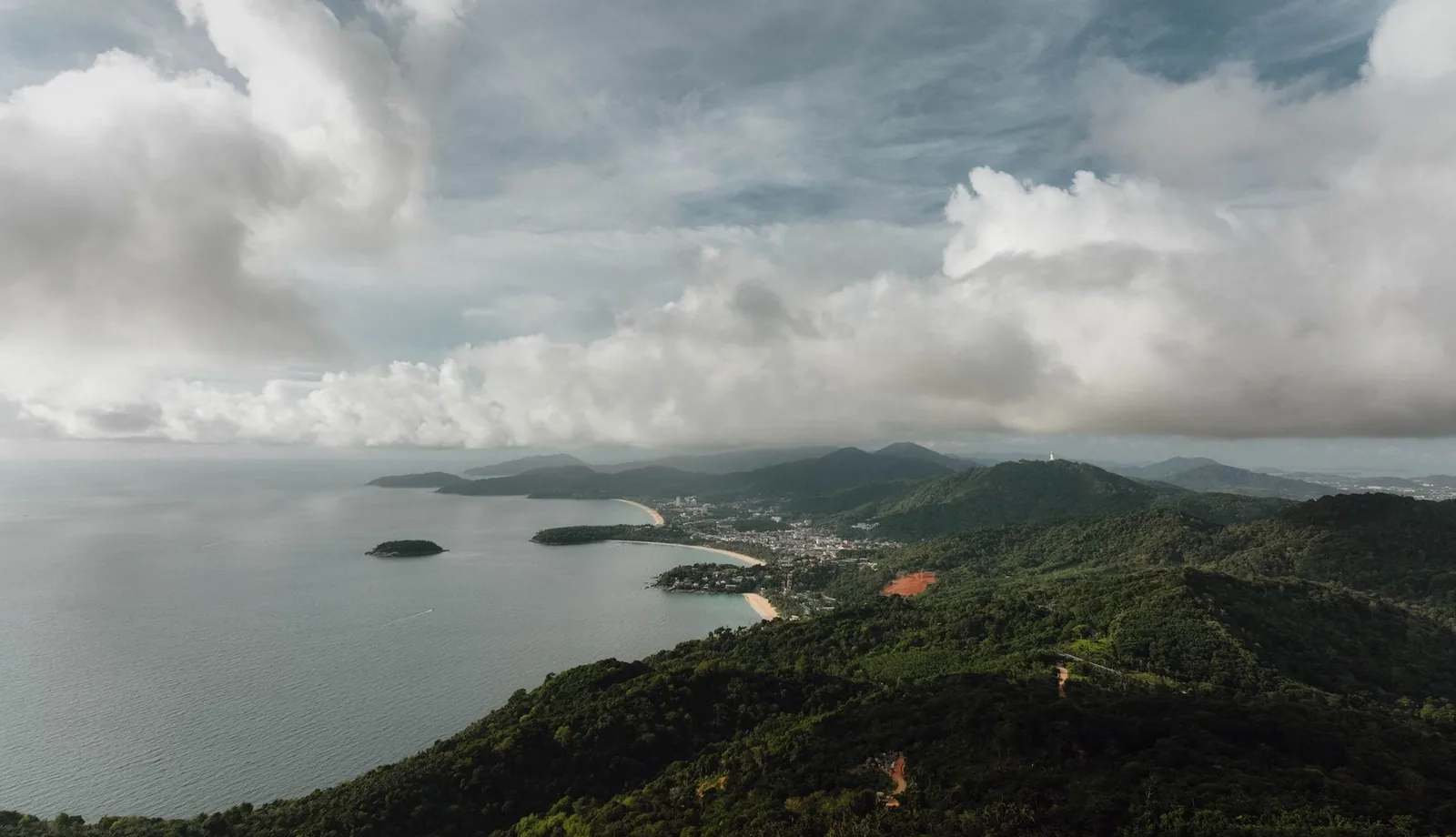
Phuket's danger during monsoon season is not uniform across the island, and this is the detail that actually matters for anyone evaluating a specific property rather than planning a single trip. The west-coast beaches, Patong, Karon, Kata, Kamala and Nai Thon among them, face the open Andaman Sea directly and carry the monsoon's full force and its rip current risk. The east coast, Rawai, Ao Yon and Panwa, faces the more sheltered Gulf of Thailand side and stays calm through the same months that make the west coast genuinely hazardous. A property on the east coast is not simply a quieter alternative to the well-known west-coast beach towns, it is a structurally different proposition during exactly the months when the west coast's own selling point, its beach, becomes something to actively avoid.
The shoulder months worth knowing about specifically
November, and the window from late in the monsoon through early dry season, along with the earlier stretch in May and June before the rains fully set in, sit between the two extremes: weather still good enough for most purposes, pricing meaningfully below full high-season rates, and a level of tourist traffic well below the December-January peak. These shoulder windows are where a value-conscious property visit, or a rental strategy built around long-stay bookings rather than peak nightly rates, tends to make the most sense.
A worked yield comparison, with the numbers shown
Take a hypothetical Phuket condominium renting for a notional 5,000 baht a night at full high-season pricing, numbers chosen only to make the seasonal swing concrete rather than a claim about any specific property. At that rate across roughly five high-season months, November through March, the property generates a strong return relative to its purchase price. Apply the low-season discount, 40 to 60% off the same nightly rate, across the remaining seven months, and the blended annual average sits meaningfully below what a buyer extrapolating from a single high-season quote would expect. A yield figure quoted from a peak-season listing price, without this seasonal blend applied, overstates realistic annual income by a wide margin, and the gap between the two figures is exactly the kind of thing a seller has no incentive to volunteer.
What this means for a rental-focused purchase specifically
A realistic yield calculation for a Phuket property should model the actual rate curve across the full year, high-season pricing for roughly five months, monsoon discounts for the remainder, rather than extrapolating from a single high-season quote. Rental Management and Yields in Foreign Holiday Markets covers the licensing and management-fee side of this calculation in more depth, and applying that framework specifically against Phuket's own seasonal rate swing, rather than a flat assumed occupancy, is what turns a marketing yield figure into a realistic one.
Before you commit
Condominium Quota: The One Freehold Route for Foreigners in Thailand and Thai Land Leases: The 30-Year Rule and Its Limits cover the ownership structures a Phuket purchase actually runs through, and Thai Company Ownership of Land and Why It Is Risky covers a structure worth avoiding regardless of which coast a property sits on. Owning Property in Thailand as a Foreigner: The Complete Guide covers the national ownership framework, and Due Diligence When Buying Property in Another Country covers the verification habits worth applying before any purchase decision. Financing a Property Purchase Abroad and Currency Risk When Buying and Holding Property Abroad round out the practical questions worth answering alongside the seasonal picture above.
Whatever the coast, Thailand, Bangkok and Phuket each carry their own seasonal character, and Phuket's east-west split is a genuinely local detail worth understanding on its own terms rather than assuming it behaves like the rest of the country's coastline.
Sources
- Phuket's high-season and low-season rate differential, 30-50% higher in peak months and 40-60% lower in low season
- West-coast rip current risk during the May-October monsoon, annual drowning statistics, and the calmer east-coast alternative facing the Gulf of Thailand
Ready to find your next holiday home?
Browse our curated collection of vacation homes and managed farmland across India and beyond.