The Case for a Second Address
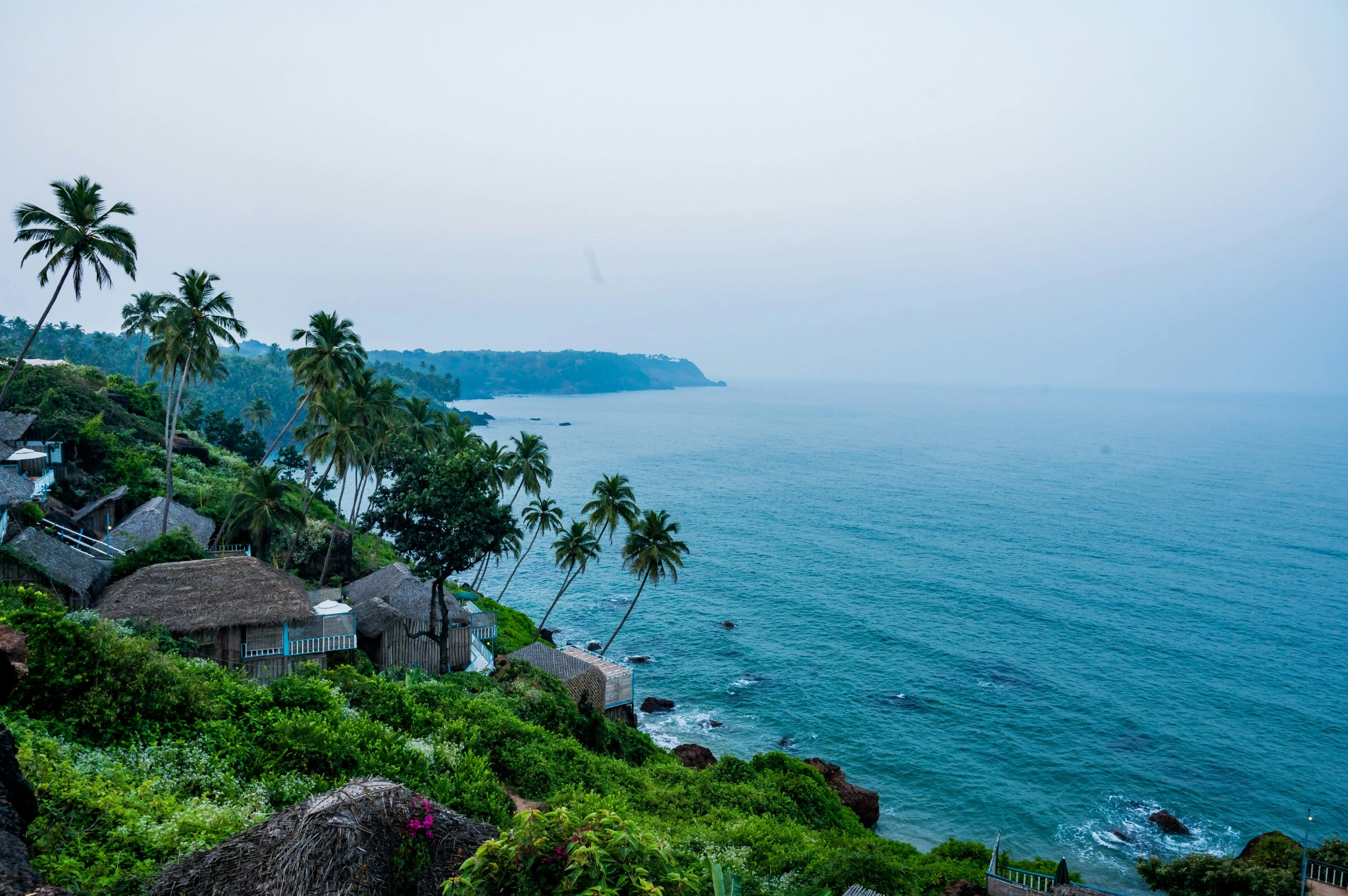
Every summer from 1864, the Government of India packed up and moved to Shimla, not because its officials loved the mountains but because the plains in the hot months were a poor place to run a country from. The instinct to keep a second address somewhere cooler is not a modern indulgence. What has changed is who can act on it. For most of the last four centuries the option belonged to emperors, viceroys and the very rich. Cleaner air, shorter journeys and work that no longer needs a desk in an office have moved it within reach of a much wider group of urban professional families, in India and abroad. For many of them it is the most practical way to keep the best of India while stepping back from the worst of it. For others it is a mistake, and this piece tries to be plain about which is which.
An instinct older than the holiday
The Mughal emperor Jahangir built Shalimar Bagh in Srinagar in 1619 as a summer retreat, a place for the court to leave the heat of the plains behind. In 1864 John Lawrence declared Shimla the summer capital of British India, and for roughly March to October each year the viceroy, his council and thousands of clerks and dependents moved up the hill. Ooty served as the summer capital of the Madras Presidency and Mahabaleshwar of the Bombay Presidency, and Darjeeling was developed from the 1830s by Bengal officials who wanted a break from the heat and humidity.
None of these were leisure towns first. They were climate decisions, made by people with the means to make them. The habit they served did not end in 1947, and it did not stay at the top: the family that keeps a flat in Lonavala, a farmhouse outside Karjat or a cottage near Coorg is repeating the same decision at a smaller scale. What the history shows is that a second place has always been a way of managing how you live, long before anyone thought of it as something to hold for a return.
The need is getting harder to ignore
The case for leaving the city for part of the year used to rest mostly on comfort. Increasingly it rests on measurements.
Start with air. IQAir, a Swiss air quality company, put Delhi's 2025 annual average of fine particulate matter (PM2.5) at 99.6 micrograms per cubic metre. The World Health Organization (WHO) annual guideline is 5. Divide one by the other and Delhi's air carried roughly 20 times the guideline concentration. Loni, in Uttar Pradesh, was the most polluted city in the same report at 112.5, more than 22 times the guideline, and the report found that India was home to three of the four most polluted cities in the world. The Lancet Countdown, which tracks health and climate change, estimated that more than 1,718,000 deaths in India in 2022 were attributable to PM2.5 from human activity, an increase of 38 percent since 2010.
Then heat. The same Lancet Countdown work found that in 2024 people in India were exposed to an average of 19.8 heatwave days each, of which 6.6 would not have been expected without climate change, about a third of the total. Compared with the 1990s, each person faced 366 more hours of heat intense enough to pose a moderate or higher risk of heat stress during outdoor activity.
A second address does not fix any of this. It is worth being careful here, because the honest version of the argument is a modest one. A few weeks a year somewhere cooler is a break, not a cure, and the places people retreat to are not clean in any absolute sense: an analysis of national pollution board data found that even the least polluted cities in India did not meet the WHO guideline. Better is relative. But better, repeated, for weeks at a time, is a real change in how a year feels.
The barriers have come down
Four things used to make a second home impractical for anyone who worked for a living: it was too far, too hard to reach, too hard to pay for, and it meant being out of reach of work. The first two have eased visibly. The Delhi to Dehradun Expressway was inaugurated on 14 April 2026, a 213 kilometre road that cut the journey between the two cities from about six hours to two and a half. Navi Mumbai International Airport began commercial operations on 25 December 2025, and the new airport at Jewar near Noida was inaugurated on 28 March 2026, both aimed at easing pressure on the older airports in their regions. A hill town that was a full day away a decade ago can now be a long weekend's easy drive. Where to Buy in Mulshi: A Micro-Market Map and Neighbourhood Guide: Ghoti and the Kasara Approach show what that looks like on the Pune and Mumbai side.
Work is the third change. A 2022 report by the National Association of Software and Service Companies (NASSCOM) and Boston Consulting Group found that roughly 70 percent of organisations in India's technology industry were looking at hybrid models beyond the pandemic. That is one industry, and many jobs still need a person in a building. But for those whose work travels, a second home stops being a place visited for two days and becomes somewhere to work from for a week. Escaping the City: The Second-Home Mindset looks at how much that changes the calculation.
Cost is the barrier that has moved least, and it should not be glossed over. Listings around Mulshi, for example, show plots near the lake or the highway from roughly 40 to 60 lakh rupees for 11 guntha and upward, before anyone has built anything. Those are asking prices, not transactions, but they make the point: this is within reach of a dual-income professional household with real savings, not of everyone, and the next sections are about what that money is and is not buying.
It is about how you live, not what it returns
A second home is a poor way to make money and a reasonable way to change how you live, and the two should not be confused. Nothing here argues that land or a house will rise in value, and a buyer who needs it to is making a different decision, with different risks, that deserves its own analysis. What you are buying is use: the weeks you actually spend there.
That is why the useful arithmetic is about nights, not prices. A family that takes three week-long stays a year at a Coorg homestay averaging about 3,478 rupees a night spends 3 x 7 x 3,478 = 73,038 rupees. Owning costs something every year whether or not anyone visits, and You Keep Going Back to Coorg. Should You Own There? works through exactly where the line falls. The honest test of whether a second address is for you is the number of nights you would really spend there, which is almost always lower than the number you imagine on the day you fall for a place.
How the place is built matters as much as where it sits. A house that will be empty three weeks out of four needs different decisions from a city home, from where the caretaker lives to how the roof handles a monsoon, which Designing a Weekend Farmhouse on Your Plot covers in detail. And the choice of hills or coast, with its different maintenance burdens and different risks, is more consequential than most buyers expect, as Hill Station or Coast? A Framework, Not an Answer sets out.
Who it is not for
It is not for someone who will go twice a year. At that frequency a rented stay costs less and asks for nothing in return. It is not for someone who would have to stretch to afford it, since land and second homes can be slow to sell and are not a place to park money you may need back. It is not for anyone whose plan only works if the place appreciates or fills with paying guests, because then it is an investment case and should be judged as one.
It is not for someone whose work, or whose family's health, depends on being close to a city hospital or an office most days. Distance is the quiet cost of all of this, and a place that is hard to reach on a Friday evening quickly stops being visited. And it is not for someone who dislikes the unglamorous side of ownership: a property that sits empty needs someone to look after it, and finding that person is part of the purchase.
The rules also differ by place. Delhi buyers drawn to Dehradun by the new expressway should read Section 154 Permission in Uttarakhand: Who Needs It first, because the state limits what outsiders can buy. A buyer working through any market should have read 10 Questions to Ask Before Signing Anything before a deposit changes hands.
Abroad, the logic holds and the rules change
The same reasoning applies to a second address outside India, and the journeys are shorter than many people assume: a direct flight from Mumbai to Dubai takes roughly three and a half hours, and from Chennai to Colombo about an hour and a half. What changes abroad is what you are legally allowed to own. A foreign buyer in Thailand has a freehold route through the condominium quota described in Condominium Quota: The One Freehold Route for Foreigners in Thailand, while Sri Lanka's approach is covered in The 99-Year Lease Route in Sri Lanka, and Can Foreigners Own Property Abroad? Freehold, Leasehold and Use Rights sets out the general picture. Each market is different enough that nothing here transfers automatically from one to the next.
Where that leaves the question
A second address is not for everyone, and it is not a shortcut to anything. But the conditions that made it a privilege for emperors and viceroys have loosened considerably: the air in the biggest cities is measurably worse than the guideline for it, the heat seasons are longer, the roads and airports are better, and for many people the job no longer fixes where they sleep. If you can honestly count the nights you would use it, and the arithmetic holds without help from appreciation or rent, it is a practical way to live better for part of the year. If you cannot, rent for now, and keep the question open. Coorg, Igatpuri, Karjat, Dubai and Sri Lanka are some of the places where people have been answering it.
Sources
- Shalimar Bagh, Srinagar: built by Jahangir in 1619 as a summer retreat
- Shimla's declaration as summer capital of British India in 1864 and the annual March to October move of the government
- Hill stations as climate refuges for colonial administrators: Ooty, Mahabaleshwar and Darjeeling
- IQAir 2025 city ranking: Delhi at 99.6 micrograms per cubic metre against the WHO guideline of 5
- IQAir 2025 World Air Quality Report: Loni at 112.5 and India home to three of the four most polluted cities
- Lancet Countdown 2025 India data sheet: heatwave days, heat stress hours and air pollution deaths
- None of India's least polluted cities meets the WHO PM2.5 guideline, on national pollution board data
- Delhi to Dehradun Expressway: 213 kilometres, inaugurated 14 April 2026
- Navi Mumbai International Airport commercial operations from 25 December 2025
- Noida International Airport at Jewar inaugurated on 28 March 2026
- NASSCOM and Boston Consulting Group on hybrid work in India's technology industry, 2022
- Average Coorg homestay rates
- Direct flights from Mumbai to Dubai
- Direct flights from Chennai to Colombo
Ready to find your next holiday home?
Browse our curated collection of vacation homes and managed farmland across India and beyond.