Neighbourhood Guide: Ghoti and the Kasara Approach
Most guides to Igatpuri talk about Kasara as a name on a train schedule, the last stop before the ghat section climbs toward Igatpuri proper. For a buyer looking at Ghoti specifically, Kasara is not just a station name, it is the actual reason this pocket sits where it does, and understanding the ghat's own engineering is a more useful way to understand Ghoti's connectivity than the highway distance alone.
What the Kasara-to-Igatpuri climb actually is
The Thal Ghat rail section between Kasara and Igatpuri opened in 1865, and across roughly 9.5 miles the line climbs from about 948 feet to 1,918 feet, a gradient steep enough that Indian Railways still runs dedicated banking locomotives to help heavy trains up the incline, a practice carried over from the steam era into today's electric operations. Igatpuri railway station itself was built as the loco change-over point for this section, where engines were swapped for trains heading in either direction. This is not incidental railway trivia: it explains why Igatpuri grew into a proper town with civic infrastructure well before most of the surrounding Sahyadri towns did, and it explains why Kasara, sitting at the base of the climb, functions as the practical gateway a Ghoti buyer actually uses rather than a name on the way to somewhere else.
Ghoti's own position, separate from Igatpuri town
Ghoti sits on the NH3 Nashik highway corridor, close enough to the Samruddhi Mahamarg's Nashik-Mumbai stretch that plots here are commonly marketed on direct highway frontage, roughly two hours from Mumbai by road. This gives Ghoti a genuinely different profile from Igatpuri town itself: where Igatpuri's identity is built around the railway history and its established hill-station character, Ghoti's is built around highway access and a still-developing mix of residential plots, farmhouses and agricultural land. A buyer choosing between the two is choosing between an established town centre with more built infrastructure and a highway-corridor pocket where land is generally more available and the character is still forming.
What is actually available here
Recent transaction data for Ghoti shows land trading at roughly 2,500 to 2,600 rupees per square foot, a figure a buyer should treat as a starting reference point rather than a fixed rate, since it will vary meaningfully by exact plot location relative to the highway and by classification. Available stock skews heavily toward agricultural and residential plots and farmhouses rather than built apartments, consistent with a corridor town still in the early stages of residential development rather than a mature second-home market.
Why the ghat section matters beyond history
For an owner actually visiting on weekends, the Kasara-Igatpuri stretch is the one part of the journey where road and rail both slow down, the same terrain that made it a 19th-century engineering challenge still shapes travel time today. Traffic on the ghat road section during monsoon and holiday weekends is a real, recurring consideration for a Ghoti buyer relying on road access from Mumbai, and it is worth experiencing on an actual weekend visit rather than assumed from a flat two-hour highway estimate that does not account for ghat-section slowdowns.
The climate this elevation actually buys
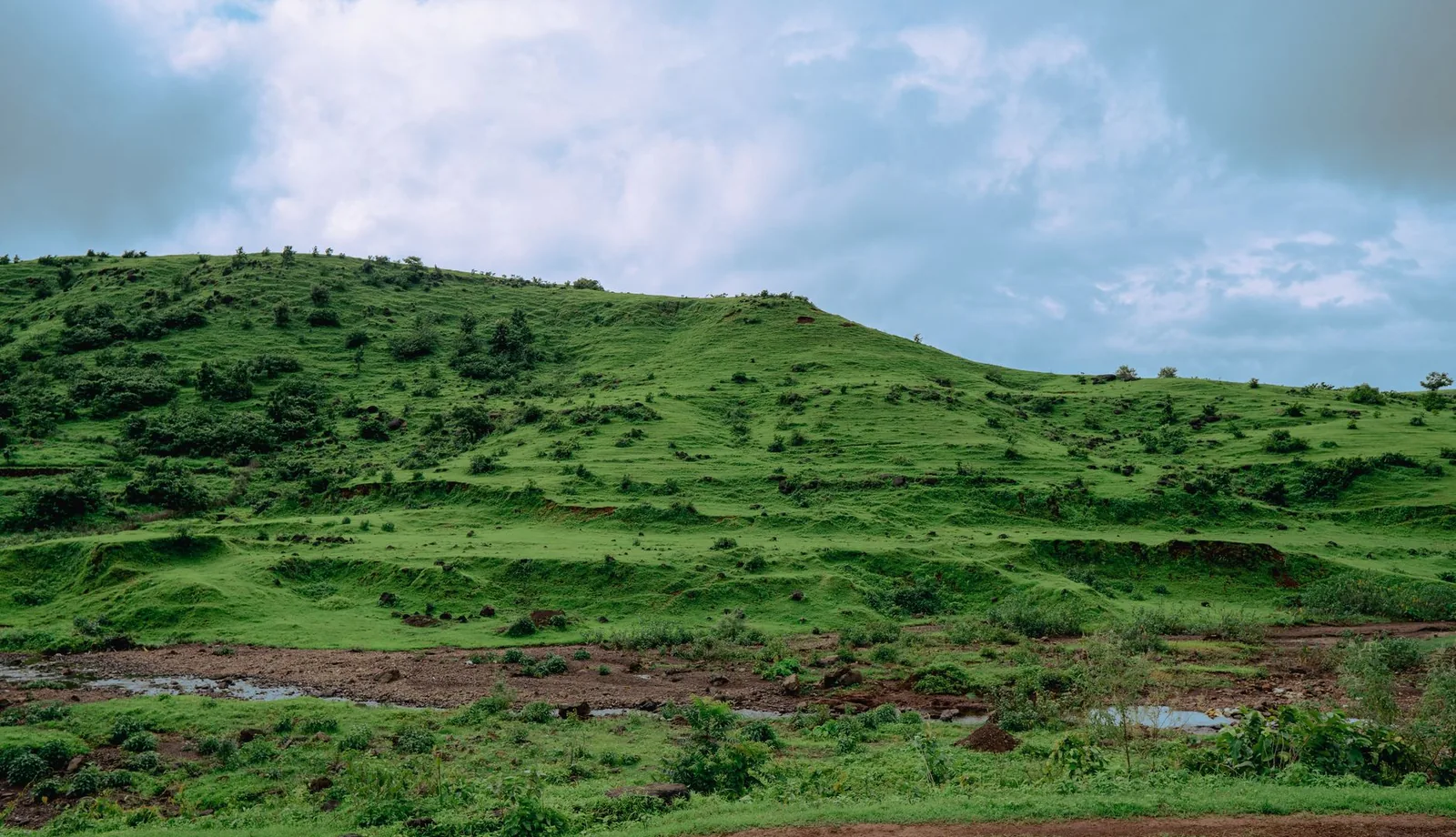
Igatpuri and the surrounding Ghoti stretch sit high enough in the Sahyadri range to carry one of the heaviest monsoon rainfall totals in the region, considerably wetter than Nashik city itself despite the short driving distance between them, and noticeably cooler through the winter months than the plains below the ghat. For a buyer thinking about a farmhouse or weekend plot specifically, this cuts both ways: the same rainfall that keeps the landscape genuinely green through most of the year also means drainage, roofing and damp-proofing matter more here than in a drier Maharashtra location, and a monsoon-season site visit is a far more honest test of a plot's actual character than a pleasant winter weekend would ever reveal.
Water bodies within reach, and why they matter for a plot here
The wider Igatpuri taluka sits close to several reservoirs built for the region's water supply and irrigation, and proximity to open water is one of the more consistent draws for buyers looking at plots in this belt specifically, rather than at Ghoti's highway frontage alone. A plot's actual distance from a lake or reservoir shoreline, and whether that shoreline is realistically accessible or simply visible from a distance, is worth confirming directly on a site visit, since marketing material for this belt leans heavily on scenic water views that do not always translate into usable access.
What Avacasa recommends
Verify the specific plot's actual distance from the highway and from Kasara itself rather than relying on Ghoti's broad reputation as a highway-corridor location, since the difference between highway-frontage and interior plots is significant here. Visit on a weekend, ideally during monsoon, to experience the ghat-section travel time firsthand before assuming the flat two-hour estimate holds. Is Igatpuri a Good Investment in 2026? An Honest Take covers the broader destination case Ghoti sits inside, and The Maharashtra Land Revenue Code: A Buyer's Guide is essential given the area's heavy mix of agricultural land.
Before you commit
Where to Buy in Igatpuri: A Micro-Market Map covers how Ghoti compares against Igatpuri town and the other pockets in the taluka directly. NA Plot vs Agricultural Land: Which Should You Actually Buy? is directly relevant given how much of Ghoti's available stock is agricultural, and How to Read a 7/12 Extract Before You Buy covers the specific record every plot here needs checked. How to Negotiate Land Price Like a Pro and How to Verify a Developer's Track Record round out the practical steps, and 10 Questions to Ask Before Signing Anything covers the wider checklist before any purchase here closes. Designing a Weekend Farmhouse on Your Plot is relevant given how much of Ghoti's stock is farmhouse-oriented rather than built apartments.
Whatever the pocket, Igatpuri, Karjat and Coorg each sit on their own specific highway or rail corridor, and Ghoti's Kasara-ghat dependency described above is genuinely specific to this location rather than a generic hill-town pattern.
Sources
- Ghoti and Igatpuri property listings, transaction rates and available land types
- Thal Ghat railway section between Kasara and Igatpuri: gradient, elevation change and banking locomotive operations
Ready to find your next holiday home?
Browse our curated collection of vacation homes and managed farmland across India and beyond.