Myth-Busting: 'Agricultural Land Is Always a Bad Buy'
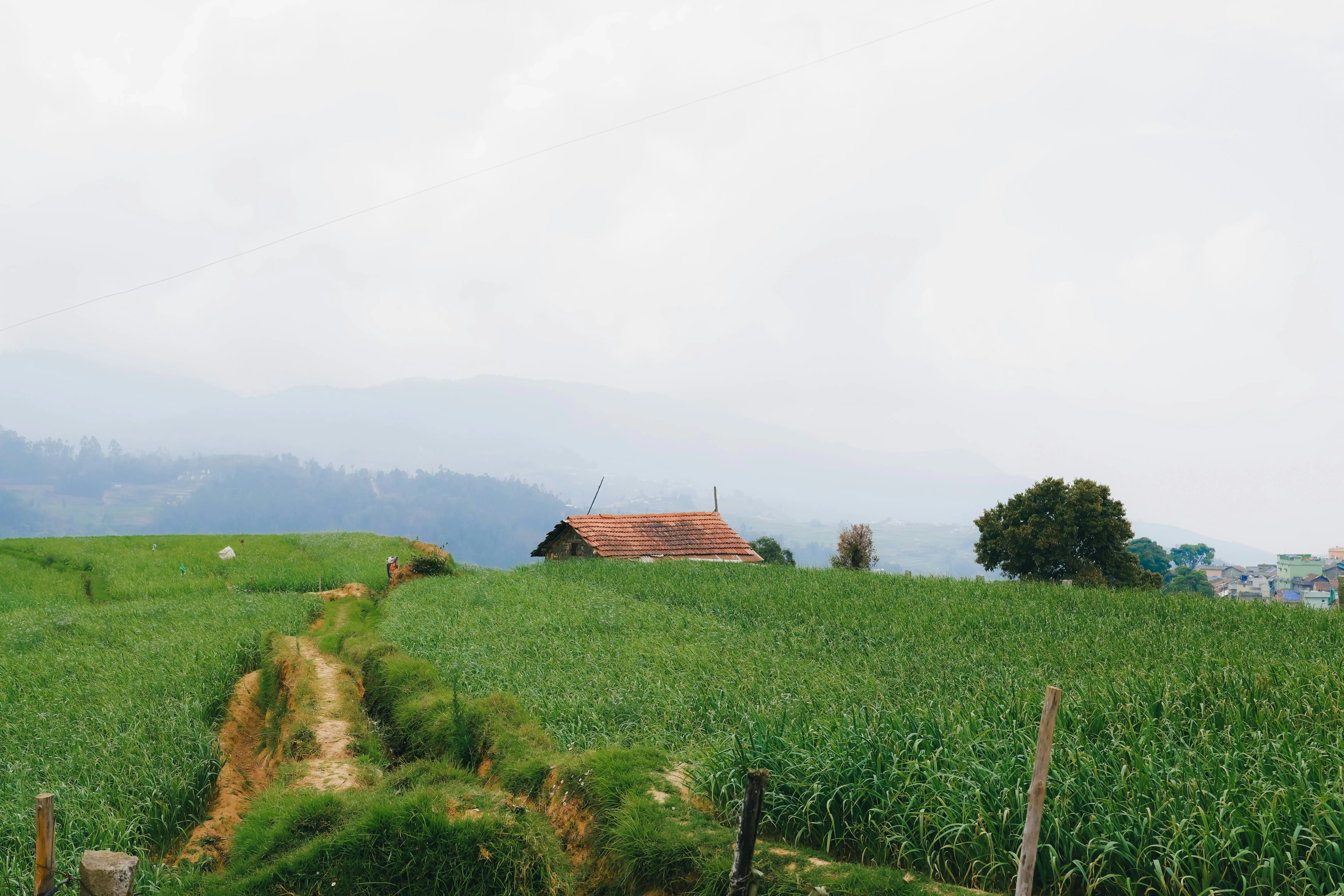
"Agricultural land is always a bad buy" gets repeated as though it were a settled fact rather than a rule of thumb that happens to be right about one specific failure mode and wrong about most others. The failure mode is real: agricultural land bought with the wrong expectations, on the wrong assumptions about conversion, is a genuinely bad investment. The blanket version of the claim is not.
The claim usually means one specific thing
When someone says agricultural land is a bad buy, they are almost always describing a particular sequence: a buyer purchases agricultural land assuming it converts easily to non-agricultural (NA) status for construction, discovers the conversion process is slower, more restrictive or outright blocked in that specific state, and ends up holding land that cannot be built on and cannot be easily resold to anyone who wanted the same thing. NA Plot vs Agricultural Land: Which Should You Actually Buy? covers this conversion question directly. That specific failure is real and common. It is not, however, the only reason anyone buys agricultural land, and treating it as the definitive verdict on the entire asset class ignores every buyer who was never trying to convert it in the first place.
Buyers who are not trying to build are not making the mistake the rule warns against
A buyer purchasing agricultural land purely as land, for farming income, for long-term appreciation on the plot itself, or as part of a working farmhouse arrangement where the agricultural designation is a feature rather than an obstacle, is not exposed to the conversion risk at all. The blanket warning assumes every buyer's actual goal is eventually building a residence or a commercial structure, which is a reasonable assumption for a large share of second-home buyers but not a universal one. For a buyer whose plan genuinely does not require NA conversion, the entire premise of the warning does not apply.
State-by-state variation makes a national rule unreliable either way
Conversion difficulty is not uniform across India. Some states run a comparatively straightforward NA conversion process for land that meets zoning and infrastructure criteria; others impose restrictions that make conversion slow, expensive or effectively unavailable for a specific plot depending on its zoning classification, its proximity to protected areas, or state-specific land ceiling and tenancy laws. The Maharashtra Land Revenue Code: A Buyer's Guide and How to Read a 7/12 Extract Before You Buy cover how this plays out in one specific state where the framework is well documented. A rule calibrated to the hardest states, applied nationally, overstates the risk in states where conversion is genuinely more workable, and a rule calibrated to the easiest states understates the risk everywhere else.
The arithmetic that actually decides it
Agricultural land is typically priced meaningfully below equivalent NA land in the same micro-market, and that price gap is the entire economic case for buying it in the first place. If a plot costs 40 percent less as agricultural land than an equivalent NA-converted plot nearby, and conversion in that specific state and zone realistically costs, in fees and time, an amount well under that 40 percent gap, the agricultural purchase is arithmetically the better buy even accounting for the conversion process. If conversion in that state and zone is actually blocked, indefinitely delayed, or costs close to or more than the price gap itself, the same purchase is a bad one for exactly the reason the blanket rule describes. The rule is not wrong about the mechanism, it is wrong to skip the arithmetic and assume the answer is the same everywhere.
What actually needs checking before deciding
The specific answer for any given plot depends on the zoning classification recorded on the land record itself, the state's specific conversion process and typical timeline, any tenancy or ceiling-act restrictions attached to that classification, and whether the buyer's actual plan requires conversion at all. None of these can be answered by a national rule of thumb, and none of them are visible from the price alone.
What Avacasa recommends
Treat "agricultural land is a bad buy" as a description of one specific, avoidable mistake, buying agricultural land with an unverified assumption about conversion, rather than a verdict on the asset class. Check the specific state's conversion process and the specific plot's zoning classification before deciding, and if the plan does not require conversion at all, the entire warning is beside the point. How to Verify a Developer's Track Record and How to Negotiate Land Price Like a Pro are worth reading regardless of which side of this decision a buyer lands on.
Before you commit
Land vs Apartments: The Better Long-Term Asset? is worth reading before this question even arises, since it shapes whether land of any kind fits the buyer's actual goal. RERA Explained: What Project Registration Actually Protects is relevant for any developer-led agricultural-to-residential conversion project specifically, and 10 Questions to Ask Before Signing Anything and Due Diligence When Buying Property in Another Country round out the checklist for an NRI buyer evaluating either agricultural or NA land. Can Foreigners Own Property Abroad? Freehold, Leasehold and Use Rights is relevant for an NRI or OCI buyer specifically, given the additional FEMA restrictions that apply to agricultural land purchases by that category of buyer regardless of state. Escaping the City: The Second-Home Mindset is worth answering honestly first, since a buyer's actual plan for the land is what determines whether this entire conversion question matters to them at all.
Whatever the state, Karjat, Coorg and Igatpuri each carry their own specific version of this conversion question, and the state-level rules covered above apply differently in each.
Sources
- Non-agricultural (NA) land conversion process and state-level variation in India
- FEMA restrictions on agricultural land purchase by NRIs and OCIs
Ready to find your next holiday home?
Browse our curated collection of vacation homes and managed farmland across India and beyond.