Designing for Heavy Monsoon: Roofs, Drainage & Damp
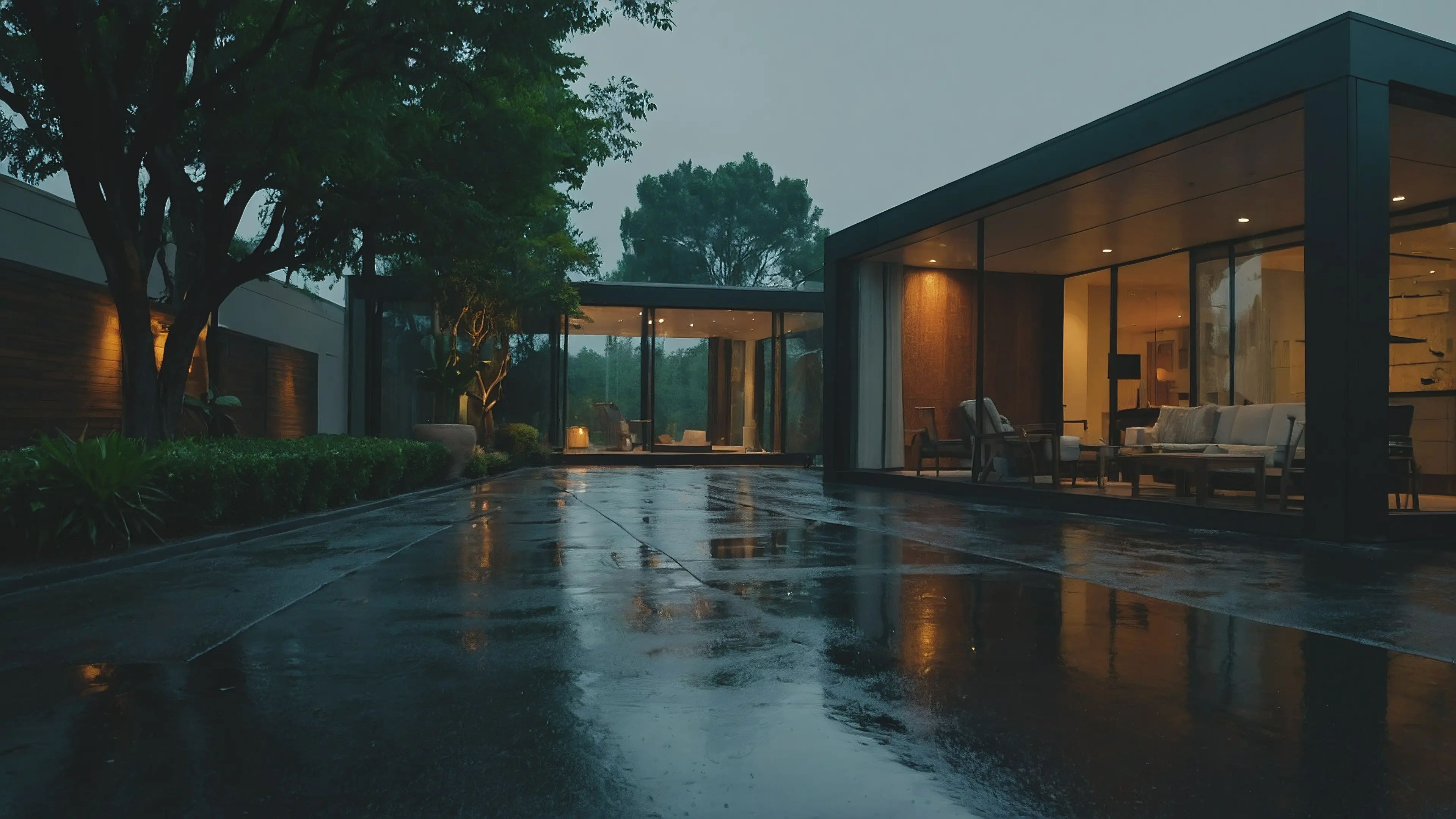
A flat roof and a steep, deeply overhung pitched one are not two aesthetic options in a genuinely heavy-monsoon location, they are two different bets on how the building handles water. One fights rain with membranes, drains and constant maintenance. The other simply refuses to let water linger long enough to become a problem. In the Western Ghats, Goa and coastal Kerala, that difference stops being a style choice and becomes the single decision most likely to determine whether a second home ages well or badly.
Why the roof shape is the first decision, not a finishing touch
A sloping roof, tiled or metal, sheds water by gravity rather than by relying on a waterproofing system to hold it back, which is why it earns its reputation specifically in the highest-rainfall parts of the country. A flat roof in the same location is not impossible, but it commits the owner to an ongoing maintenance relationship with membranes and drains that a well-built pitched roof simply does not require to the same degree. Steepening the pitch, deepening the eave overhang, and oversizing the drainage relative to what a drier-climate design would use are the three adjustments that actually matter once rainfall crosses into genuinely heavy territory, and treating any of them as optional to save on upfront cost is the single most common way a monsoon-zone build ends up with a recurring leak problem within a few years of completion.
Drainage: getting the slope and the outlets right the first time
Even a correctly pitched roof needs its own drainage detailing done properly: a minimum slope of roughly one to one and a half degrees to avoid standing water, gutters and downpipes sized to the roof's actual catchment area and the local rainfall intensity rather than a generic standard size, and outlets kept clear of debris screens so a monsoon downpour does not back up at exactly the moment it matters most. Aluminium gutters are the sensible material upgrade for the Konkan coast, Goa and Kerala specifically, holding up against salt air and heavy, sustained rain better than cheaper alternatives that were designed with a drier, less corrosive climate in mind.
Waterproofing where a flat section is unavoidable
Most homes, even ones built around a primarily sloped roof, have some flat or low-slope section, a terrace, a utility roof, a balcony, and this is where waterproofing actually earns its cost. Elastomeric coatings with high elongation values handle the thermal movement and sustained rainfall of a Western Ghats or coastal climate better than rigid alternatives that crack under the same conditions, and torch-on membrane systems, running roughly 80 to 160 rupees per square foot installed, offer an eight to ten year working life and genuinely bridge small cracks rather than simply sitting over them. Treating this as a one-time installation rather than a system that needs periodic inspection is where most flat-roof waterproofing eventually fails, regardless of which specific product was used originally.
Windows and eaves: the detailing that decides whether driving rain gets in
A window sill is a building's first real line of defence against rain, and a flat, recessed sill without an outward slope is precisely where water pools and eventually finds its way inward as seepage rather than running off. A sill with a five to eight degree outward slope, extending slightly beyond the wall face, does the job a flat sill cannot: it moves water away from the opening rather than letting it collect there. The eave overhang above matters just as much and works alongside the sill rather than instead of it, a projection of roughly 600 to 900 millimetres beyond the wall throws the facade into shade, deflects rain clear of the wall surface, and keeps a verandah or screened space beneath usable even mid-downpour, exactly the kind of covered, in-between space a heavy-monsoon home actually depends on for several months of the year.
Cross-ventilation matters as much as waterproofing, for a different reason
Every habitable room benefiting from openings on two perpendicular walls, enabling genuine cross-flow rather than a single window that only catches air from one direction, is what actually keeps a monsoon-climate home liveable without leaning entirely on mechanical cooling and dehumidification. This is not purely a comfort question: a home that cannot ventilate itself well through the wet months holds humidity longer after each rain event, and that trapped humidity is itself a contributor to the damp and mould problems a good roof and sill design are meant to prevent in the first place. Waterproofing keeps water out, but ventilation is what gets the ambient moisture that inevitably gets in back out again, and a design that nails the first while ignoring the second only solves half the problem.
Damp, and why it shows up months after the monsoon actually ends
Rising and penetrating damp in walls is frequently misdiagnosed as a roof problem when the actual cause is inadequate ground-level drainage or a missing damp-proof course at the foundation, and a homeowner chasing a damp patch on an internal wall by re-waterproofing the roof above it is sometimes fixing the wrong system entirely. In a genuinely wet climate, damp-proofing needs treating as seriously at the foundation and ground-floor level as waterproofing is treated on the roof, since water finds its way into a structure through whichever path offers the least resistance, and that path is not always the one directly above the visible damage.
What Avacasa recommends
Choose the roof shape based on the specific site's actual rainfall intensity rather than on the flat, modernist profile a design brief might otherwise favour, and size gutters, downpipes and roof slope to that rainfall rather than to a generic national standard. Budget for waterproofing as a system with a working life and a maintenance schedule attached, not a one-time installation, and investigate ground-level drainage and foundation damp-proofing directly before assuming an internal damp patch is automatically a roof leak. How to Verify a Developer's Track Record is relevant for a buyer relying on a developer's own construction quality claims for any of this.
Before you commit
NA Plot vs Agricultural Land: Which Should You Actually Buy? and Financing a Plot: Land Loans, LTV & Construction Loans cover two questions that sit alongside construction design for anyone building rather than buying complete, and RERA Explained: What Project Registration Actually Protects is relevant for a buyer relying on a developer to handle this design work correctly. How to Negotiate Land Price Like a Pro and Escaping the City: The Second-Home Mindset round out the picture for a buyer still early in deciding where and how to build. Where to Buy in Coorg: A Micro-Market Map and Land vs Apartments: The Better Long-Term Asset? cover two more decisions worth resolving before committing to a specific monsoon-belt site.
Whatever the destination, Goa, Coorg and Karjat each sit inside the Western Ghats or coastal monsoon belt this design guidance applies to directly.
Sources
- Sloping roof design for high-rainfall Indian climates: pitch, overhang and drainage sizing
- Elastomeric waterproofing coatings and torch-on membrane systems, cost and working life
- Sloped window sills, eave overhang dimensions, and cross-ventilation as core tropical design requirements
Ready to find your next holiday home?
Browse our curated collection of vacation homes and managed farmland across India and beyond.