Kasauli Through the Year: Pine, Monsoon and the Winter Light
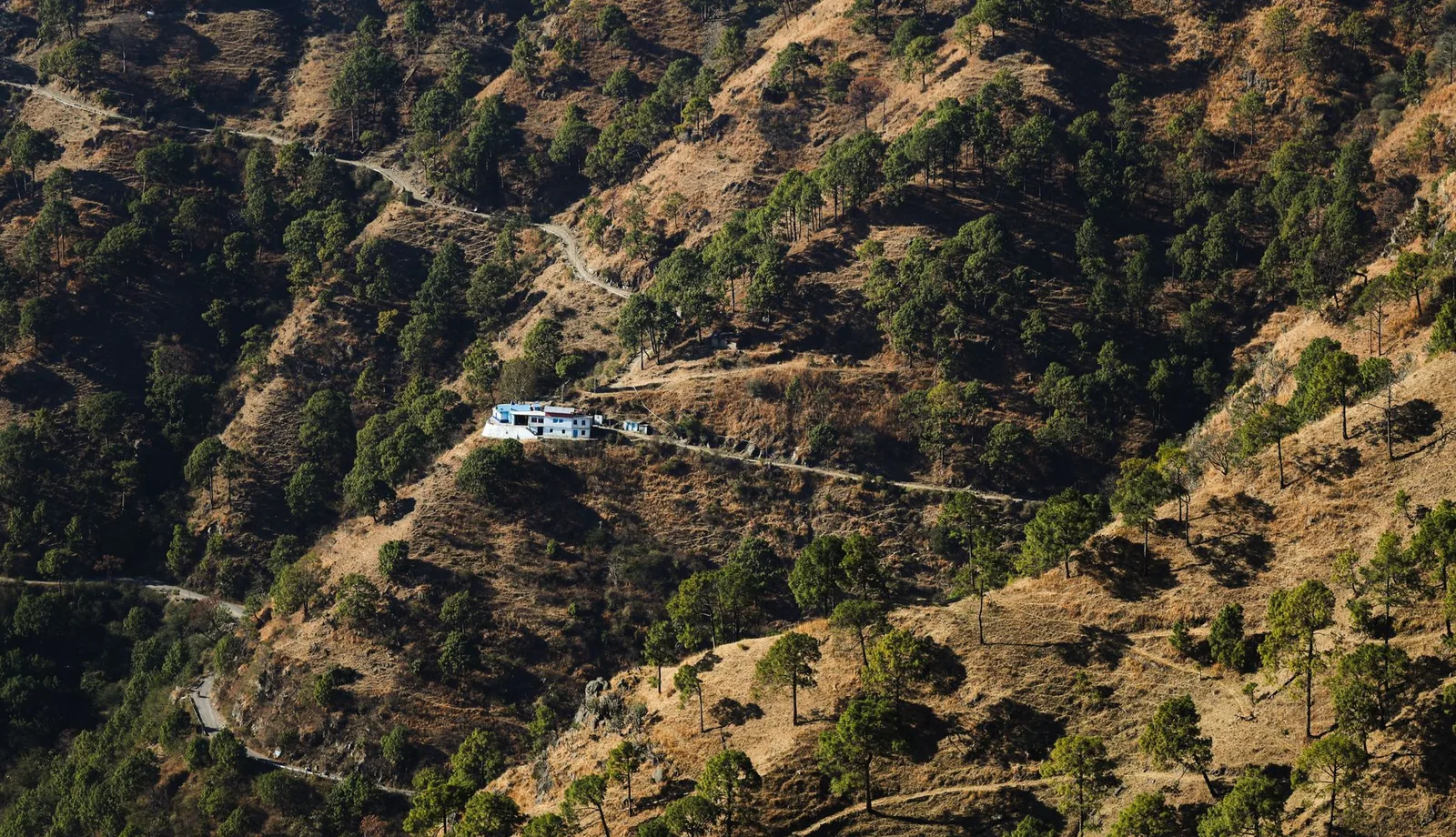
Ask when to visit Kasauli and most answers collapse into "April to June" or the safer "spring and autumn." That is the version every listing already describes. The town's actual character, the pine forest in real rain, the specific quality of winter light through bare chestnut branches, shows up in the months either side of the crowded season, and a buyer evaluating a property purely on a peak-season visit is seeing Kasauli at its least distinctive.
Winter, January to March: the cold that defines the pine
January is Kasauli's coldest month, average temperatures running roughly 4 to 10 degrees Celsius, with snowfall possible from December through February and occasional dips below 4 degrees in December itself. This is also when the chir pine, Himalayan oak and chestnut forest the town is named for actually earns the description, bare branches and cold, clear air rather than the dense green of summer. February and March mark winter's retreat, milder temperatures returning gradually, and this shoulder window is genuinely good for trekking and outdoor walks, precisely because the crowds who wait for April have not arrived yet. A property visit timed to this window shows a buyer how a house handles genuine cold, not just how it photographs in mild weather, which matters directly for anyone planning to actually live in it through the winter rather than visit only in season.
Summer, April to June: the crowded season, and why it earns the crowd
Summer runs April through June, temperatures climbing from a mild 15 to 25 degrees in April to a warmer 28 to 32 degrees by May and June, though Kasauli's elevation keeps it meaningfully cooler than the plains it draws visitors away from. This is the town's busiest season by a wide margin, and it earns that popularity honestly: comfortable days, cool evenings, and the specific relief of hill air after a drive up from Chandigarh or Delhi in the plains' own summer heat. It is also the season every other piece of Kasauli marketing already describes in detail, and a buyer who only ever sees the town in this window is seeing the version everyone else has already priced into their decision.
Monsoon, July to September: the season the brochures skip
Monsoon runs roughly June through September, heaviest in July and August, average monthly rainfall in the range of 150 to 200 millimetres, with temperatures settling into a mild 18 to 22 degrees even as the rain itself dominates the days. This is deliberately the season most visitor guides steer people away from, and it is also when the forest the town is actually named for looks the way it does on a postcard rather than the way it looks in a dry-season photograph: saturated green, mist sitting low against the pine, the particular quiet of a hill town without its peak-season crowd. The trade-off is real. Roads can be difficult, and any property visit in this window should build in slack for delays rather than a tight schedule, but treating the monsoon purely as the season to avoid misses the one stretch where Kasauli looks like the forest town its own name describes rather than the postcard version built for photographs.
The post-monsoon window most visitors miss entirely
September and into October sits in the gap between the monsoon's retreat and winter's arrival, and it is arguably the single most underrated stretch on Kasauli's calendar. The rain has washed the dust out of the air, the forest is still at its deepest green from the monsoon just passed, and the walk up to Sunset Point rewards a clear day with views stretching across the Punjab plains as far as Chandigarh, visibility that only gets better as October progresses. October itself is the town's clearest month by a real margin, with the highest share of sunny days anywhere on the calendar, comfortable daytime temperatures, and crowds that have not yet caught up to how good the conditions actually are. A property visit timed to this specific gap gets a version of Kasauli that is neither the crowded brochure season nor the difficult monsoon test, and it is worth deliberately choosing over the more obvious spring window for exactly that reason.
Why the season matters more here than in most hill towns
Kasauli's genuinely constrained water and waste infrastructure, flagged directly in the National Green Tribunal's own order protecting the Kasauli Planning Area, makes the monsoon a real test of a specific property rather than a scenic backdrop alone. A buyer evaluating a house should ask directly how it and its access road handle the July-August peak, not assume a well-built structure is automatically insulated from a town-wide seasonal strain. This is a more useful question to ask during an actual monsoon visit than during the dry, easy months everyone else visits in.
So when is the actual best time to visit
It depends on what the visit is actually for. Summer is the safe, comfortable, universally recommended answer, and it is also the most crowded and least revealing version of a Kasauli visit. Winter shows the pine forest and the town's genuine cold, and is worth choosing specifically for a buyer planning to live here through the off-season rather than visit only when everyone else does. Monsoon is the honest stress test, both of the landscape at its most dramatic and of a specific property's practical resilience, and it is the one window most buyers skip entirely despite it being arguably the most useful for an actual purchase decision.
Before you commit
Is Kasauli a Good Investment in 2026? An Honest Take covers the legal and structural questions this seasonal picture sits alongside, particularly the Section 118 and NGT restrictions that shape which properties are actually available here at all. Buying Property in Himachal Pradesh: What the Law Allows covers the state-wide framework, and Financing a Plot: Land Loans, LTV & Construction Loans is relevant for a buyer weighing new construction against Kasauli's own restrictions on it. Due Diligence When Buying Property in Another Country has a domestic equivalent worth applying to any purchase timed around a single, favourable-season visit. RERA Explained: What Project Registration Actually Protects and Land vs Apartments: The Better Long-Term Asset? are worth reading for anyone comparing a Kasauli purchase against a newer gated development elsewhere in Himachal. Capital Gains Tax on Selling Land in India: The Complete Guide covers the eventual exit question for a property bought here, and NA Plot vs Agricultural Land: Which Should You Actually Buy? is worth reading for context on how classification questions elsewhere in India compare to Kasauli's own Section 118 framework.
Whatever the season, Kasauli, Shimla and Dharamshala each carry their own seasonal character well beyond the safe April-to-June answer, and comparing them across the same off-peak months is more revealing than comparing them all in the same crowded one.
Sources
- Kasauli's monthly temperature and rainfall pattern across winter, summer and monsoon
- Kasauli's snowfall window and coldest winter months
- Kasauli's September and October clarity, Sunset Point visibility, and October's standing as the clearest month of the year
Ready to find your next holiday home?
Browse our curated collection of vacation homes and managed farmland across India and beyond.