Why Bali Has Become a Serious Second Home Market — and What Every Buyer Needs to Know
There is a version of the Bali property conversation that is all lifestyle photography and projected yields. This is not that version.
Bali has, over the last several years, crossed a threshold that very few destinations cross: it has moved from being a place people visit and dream about owning in, to being a market where serious buyers from across the world are making considered, well-structured purchases. Australians, Europeans, Americans, South and Southeast Asians are all active in the same market, often for different reasons, and the infrastructure around foreign property ownership in Bali has matured significantly to accommodate them.
This piece is an honest overview of what that market actually looks like. Not the developer pitch version, and not a list of reasons to buy. A clear account of what is working, what requires careful thought, and who this market genuinely suits.
The demand picture
Bali recorded 6,948,754 international arrivals in 2025, according to official data from Indonesia's Central Bureau of Statistics (BPS). That figure was up 9.72 percent from 2024, and represents a broad and geographically diverse visitor base: Australians remain the largest single group at 1.63 million arrivals, followed by Indians at 569,000, Chinese at 537,000, and meaningful volumes from South Korea, the United Kingdom, France, and the United States, per the same BPS data.
This matters for second home buyers because rental demand in Bali is underpinned by real, recurring, multi-national tourism rather than dependence on a single source market. A property that earns income from Australian, European, and Asian guests across different seasons is a more resilient rental asset than one dependent on one nationality's travel patterns.
Hotel occupancy across star-rated properties in Bali averaged 69.54 percent in August 2025 and 62 percent across Q3 2025 as a whole, according to BPS Bali's monthly tourism overview. That occupancy level is the floor that well-managed short-term villa rentals compete with, and frequently beat, for well-positioned product.
The financial case, honestly framed
Entry prices for leasehold villas in Bali's established areas start from roughly $180,000 to $250,000 for a two to three bedroom property, with premium and well-located product in Seminyak or cliff-top Uluwatu running considerably higher. By the standards of comparable leisure and second home markets in Southeast Asia and Europe, Bali's entry point remains accessible.
Gross rental yields on well-managed, well-located properties range from 8 to 12 percent annually in high-demand areas, based on data compiled across multiple Bali property market sources for 2025. The upper end of that range reflects genuinely exceptional product in peak locations with professional management. The lower end reflects more typical villa performance in competitive corridors.
The number that matters more than gross yield is net yield, and that distinction is worth making explicit. Management fees for short-term rentals in Bali typically run between 20 and 30 percent of gross revenue. Maintenance on a tropical property runs 3 to 5 percent of the property's value annually. Indonesian income tax on rental income for non-residents is 10 percent of gross revenue, withheld at source under Indonesian tax law. After these deductions, a villa generating 10 percent gross yield is realistically producing 5 to 7 percent net. That is a real return, but it is meaningfully different from the headline number, and buyers who model net rather than gross make better decisions.
We cover the full cost picture in detail in our guide to the real cost of owning a villa in Bali.
What makes Bali genuinely different
The honest answer to why serious buyers keep arriving at Bali, rather than comparable Southeast Asian markets, is that the destination has an unusually strong combination of qualities that are difficult to find together elsewhere.
The visitor infrastructure is deep and internationally calibrated. Bali has been absorbing large volumes of international visitors for decades, and the hospitality, food, wellness, and lifestyle offering that has developed around that reflects genuine international standards rather than a tourist veneer over a local economy. A buyer who uses their property as a base will find an environment that functions well for extended stays, not just short holidays.
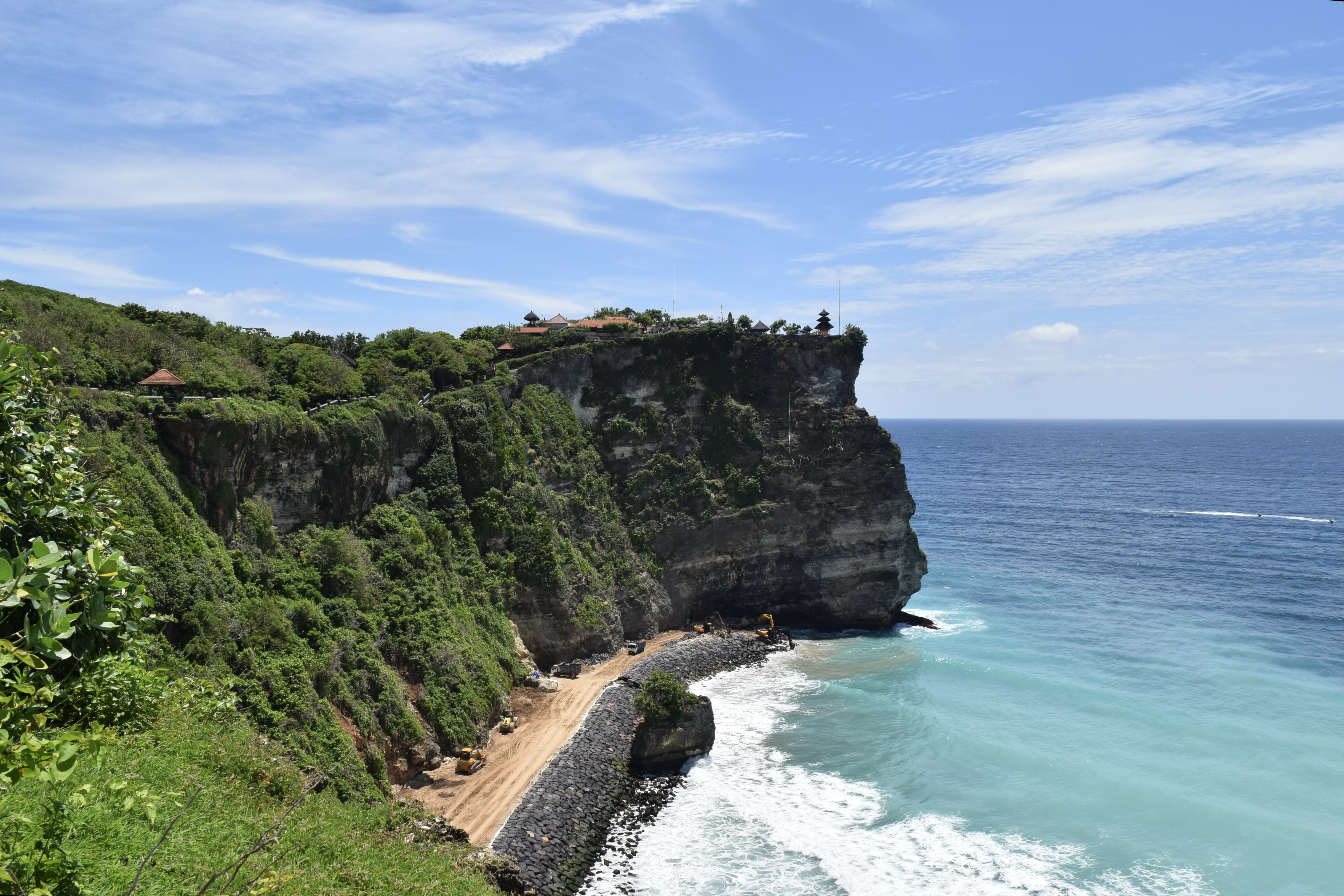
The geographic range within the island is wider than most buyers expect. Canggu offers a social, creative, beach-club-driven lifestyle. Ubud, forty minutes inland, has a cultural and wellness character that draws an entirely different visitor. Uluwatu, on the southern Bukit Peninsula, offers dramatic cliff-top topography and a surf-oriented, experience-seeking demographic. These are not slight variations on the same theme. They are meaningfully different environments, and the right area depends heavily on what kind of buyer and rental guest the purchase is designed to serve. Our micro-market guide covers the differences in detail.
The cost of living for an owner who spends time at the property is also materially lower than in the European or Australasian markets most international buyers come from. A lifestyle that would cost significantly more in Sydney, London, or Singapore is accessible at a fraction of that cost in Bali, which affects not just personal use economics but the nightly rates that rental guests are willing to pay.
What the ownership structure requires you to understand
Foreign buyers cannot own freehold land in Indonesia. This is the most important legal fact about the Bali market, and it shapes every purchase. What is available to foreign buyers is one of three legitimate structures: a leasehold right for a fixed term of typically 25 to 30 years, a use right available to those with Indonesian residency permits, or a foreign-owned company structure with its own compliance requirements.
Each of these is a legitimate route to owning and using property in Bali. None of them gives the buyer permanent ownership in the way freehold does. The quality of the purchase depends on the structure being used, the documentation behind it, and the legal advice obtained independently of the developer. Our full guide to leasehold versus freehold in Bali covers everything a buyer needs to understand before signing anything.
What the market looks like right now
2025 was a year of consolidation in Bali's property market after several years of sharp post-pandemic appreciation. Median transaction prices held stable at approximately $299,000 across the island in Q3 2025, according to market data published by InvestLand Bali, with the gap between listing and sale prices narrowing — a sign of healthier price discovery rather than either overheating or distress.
The important nuance is that the market is not uniform. The one to three bedroom villa segment in central Canggu and parts of Berawa is oversupplied. More inventory has entered than demand has absorbed, and nightly rates have compressed as operators compete for the same guest pool. Total rental revenue across Bali reached $112 to $115 million per month in Q3 2025, down from $132 to $155 million in the same period of 2024, per the same source — a decline driven by rate compression rather than falling visitor demand, but a meaningful number for buyers modelling income expectations.
Uluwatu and the broader Bukit Peninsula present a different picture. Land prices remain 30 to 40 percent below Canggu levels, while cliff-edge and ocean-view properties in the area command nightly rates that match or exceed Canggu in premium positions. The supply picture is less crowded, the visitor demographic is higher-spending, and the appreciation case for the next decade is more compelling than it is in the already-mature western coastal corridors.
Who this market actually suits
Bali as a second home purchase works well for buyers with a genuine affinity for the destination, a time horizon of ten years or more, comfort with professional property management running the asset from a distance, and realistic expectations built on net yield rather than developer projections.
It works less well for buyers who want the proximity and control of a domestic property, whose primary motivation is capital preservation rather than income and lifestyle, or who are looking to exit within three to five years. The secondary market is improving but is not as liquid as established leisure markets in most buyers' home countries.
The buyers who are most satisfied with Bali purchases over time are consistently the ones who understood the ownership structure before they committed, ran the cost model honestly, and were buying a place they actually wanted to spend time in, not just a yield figure on a brochure.
Bali is a real market, with real returns for buyers who approach it with clear eyes. The destination earns the attention it receives. What it does not do is guarantee outcomes for buyers who skipped the due diligence.
Sources
BPS Bali (Badan Pusat Statistik): 2025 Annual Foreign Tourist Arrivals — bali.bps.go.id
BPS Bali: Tourism Overview of Bali Province, August 2025 — bali.bps.go.id
ANTARA News: Bali's foreign tourist arrivals rise nearly 10 percent in 2025 — en.antaranews.com
InvestLand Bali: Bali Real Estate Market 2026 — Trends, Data and Forecast — investlandbali.com
Indonesian Tax Law: PPh Pasal 4(2) — Final Income Tax on rental income for non-residents, 10 percent of gross rental revenue
Ready to find your next holiday home?
Browse our curated collection of vacation homes and managed farmland across India and beyond.