You Keep Going Back to Rishikesh. Should You Own There?
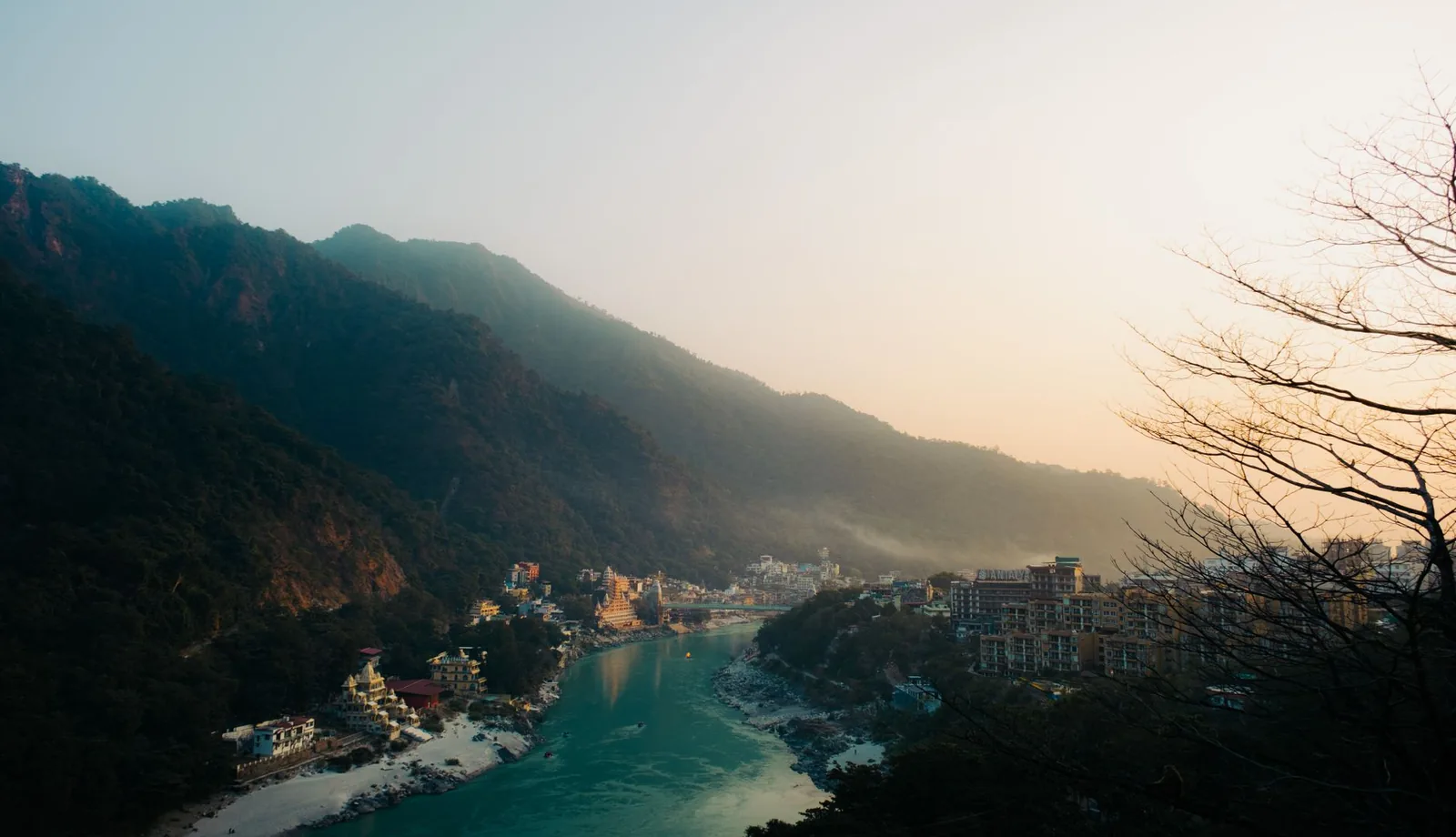
You have booked the same stretch of the Ganga for a week every year for long enough that the guesthouse owner remembers your order at the same riverside cafe. The question that eventually surfaces on one of those trips is not whether you love Rishikesh, that was settled years ago, it is whether continuing to rent it, year after year, is actually the more expensive choice.
The arithmetic worth actually doing
A comfortable stay in Rishikesh, not a dorm bed and not a luxury retreat, runs somewhere in the range of a few thousand rupees a night depending on season and location, with the city-wide average sitting close to 3,700 rupees. A week a year at that rate is a genuinely modest annual outlay, and the honest first answer to "should you own there" is that renting one week a year is, on its own, cheaper than owning for most people, in almost every market, this is not a Rishikesh-specific quirk. The calculation only shifts once the visits multiply, once a week becomes three, or once other family members start making the trip independently, or once the plan shifts from a week's holiday to weeks spent working remotely from a fixed spot on the river. Ownership starts to make arithmetic sense at the point where the accumulated annual rent, across everyone actually using the place, would have covered a meaningful share of a purchase, not at the point where affection for the place crosses some threshold.
What actually changed under you: the 2025 land law
Before running any of that arithmetic, there is a legal constraint on the table that did not exist even a few years ago and materially caps what "owning there" can mean. Uttarakhand's 2025 land law amendment, the Bhu-Kanoon revision, classifies anyone without a Uttarakhand domicile certificate as an outsider regardless of how many years they have been visiting, and restricts an outsider's residential land purchase to 250 square metres, roughly 2,690 square feet, as a one-time purchase that cannot later be combined with an adjoining plot or subdivided. Agricultural and horticultural land is barred to outsiders entirely across most of the state's hill districts, with only Haridwar and Udham Singh Nagar, both plains districts with a different economic profile, carrying different provisions. Rishikesh sits in hill-district territory for this purpose, so a repeat visitor imagining a small orchard or a working plot alongside a house is imagining something the current law does not permit them to buy, however long they have been coming back. A residential plot within the 250 square metre cap, used for an actual house rather than agricultural use, remains available, and confirming that a specific parcel is classified correctly, and that the seller can actually convey it to a non-domicile buyer under the current rule, is now the first legal question rather than a footnote.
The season shapes the arithmetic too, not just the legal cap
Rishikesh's tourism calendar is not flat, and treating it as though every week costs the same misses a real part of the decision. The International Yoga Festival in early March brings a short, sharp price spike across the city, and the weeks either side of it, roughly mid-March through April, sit at what locals consider the sweet spot for both weather and pricing. The monsoon months, July and August, bring the lowest prices of the year, a function of reduced tourist traffic rather than reduced appeal, since several visitors specifically value the monsoon for retreat and meditation stays despite the wetter conditions. Peak-season occupancy across the city's guesthouses and hotels reaches as high as 90%, which matters directly to a repeat visitor's own arithmetic: a week booked during peak season costs meaningfully more, and is harder to actually secure at short notice, than the identical week booked during the monsoon lull, so a habit of visiting at the same fixed time every year is itself a choice with a cost attached to it, separate from the ownership question.
Where the price actually sits, and why location changes the number by a wide margin
Rishikesh's residential prices vary enormously by micro-market, and averaging across the whole town obscures more than it reveals. Tapovan, close to the ashrams and the areas most attractive for short-stay guesthouse or Airbnb-style rental income, commands meaningfully higher land and flat rates than the town-wide average. Narendra Nagar, further from the riverfront tourist circuit, offers land at a fraction of Tapovan's price, a genuinely different product for a genuinely different buyer, one prioritising a quieter, more residential setting over rental income potential or proximity to the main ghats. A repeat visitor whose annual trip centres on the ghats and the ashram circuit is pricing a Tapovan-adjacent purchase, not a town-wide average figure, and the two numbers are not close enough to substitute for each other.
What ownership actually buys beyond the arithmetic
The honest case for owning in a place like Rishikesh is rarely just the annual-rent comparison, and pretending otherwise undersells the real decision. A repeat visitor who owns a fixed base gets a version of the place that changes: the same view every morning rather than whichever room was available, a kitchen rather than a restaurant order, the ability to leave belongings, yoga mats, books, a specific tea, in a place that stays put between visits. None of that shows up in a rent-versus-buy spreadsheet, and none of it should be dismissed just because it resists being quantified. What deserves the spreadsheet treatment is the purchase price, the 250 square metre cap, the seasonal cost of the trips already being taken, and the rental income realistically available in the off-months if the property is let out, since those are the parts of the decision that are genuinely checkable rather than a matter of how the place makes you feel.
Before you commit
Financing a Property Purchase Abroad is written for cross-border purchases specifically, but the underlying financing-track questions apply just as much to a domestic buyer bringing funds from outside the state, and Due Diligence When Buying Property in Another Country covers verification habits worth carrying over even for a purchase inside India. The Maharashtra Land Revenue Code: A Buyer's Guide is a useful comparison precisely because it shows how differently one other state handles land classification and outsider status, which is the same underlying question Uttarakhand's 2025 amendment answers differently. Rental Management and Yields in Foreign Holiday Markets covers the yield-calculation habits worth applying to a Tapovan-adjacent purchase intended to earn rental income in the months the owner is not there.
Is Rishikesh a Good Investment in 2026? An Honest Take and Where to Buy in Rishikesh: A Micro-Market Map cover the destination-wide case in more depth than a single repeat visitor's arithmetic can, and The Total Cost of Owning Property in Rishikesh Over Ten Years is worth reading before assuming the purchase price is the only number that matters. Rishikesh Through the Year: River Levels, Season and Silence goes further into the seasonal pattern touched on above.
Whatever the season of the next visit, Rishikesh sits alongside Dehradun and Mussoorie as three genuinely different Uttarakhand markets, each shaped by the same 2025 land law but by very different tourism and pricing patterns of their own, and You Keep Going Back to Dubai. Should You Own There? works through the identical rent-versus-buy question for a market with a completely different legal and pricing structure, worth reading as a contrast rather than a template.
Sources
- Uttarakhand's 2025 Bhu-Kanoon amendment: 250 square metre residential cap for non-domicile buyers, one-time purchase, agricultural land barred in hill districts except Haridwar and Udham Singh Nagar
- Rishikesh average hotel rate of roughly 3,700 rupees a night, and seasonal pricing across the Yoga Festival, spring and monsoon periods
- Rishikesh property price variation by locality, Tapovan versus Narendra Nagar
Ready to find your next holiday home?
Browse our curated collection of vacation homes and managed farmland across India and beyond.