Neighbourhood Guide: Naggar and the Left Bank
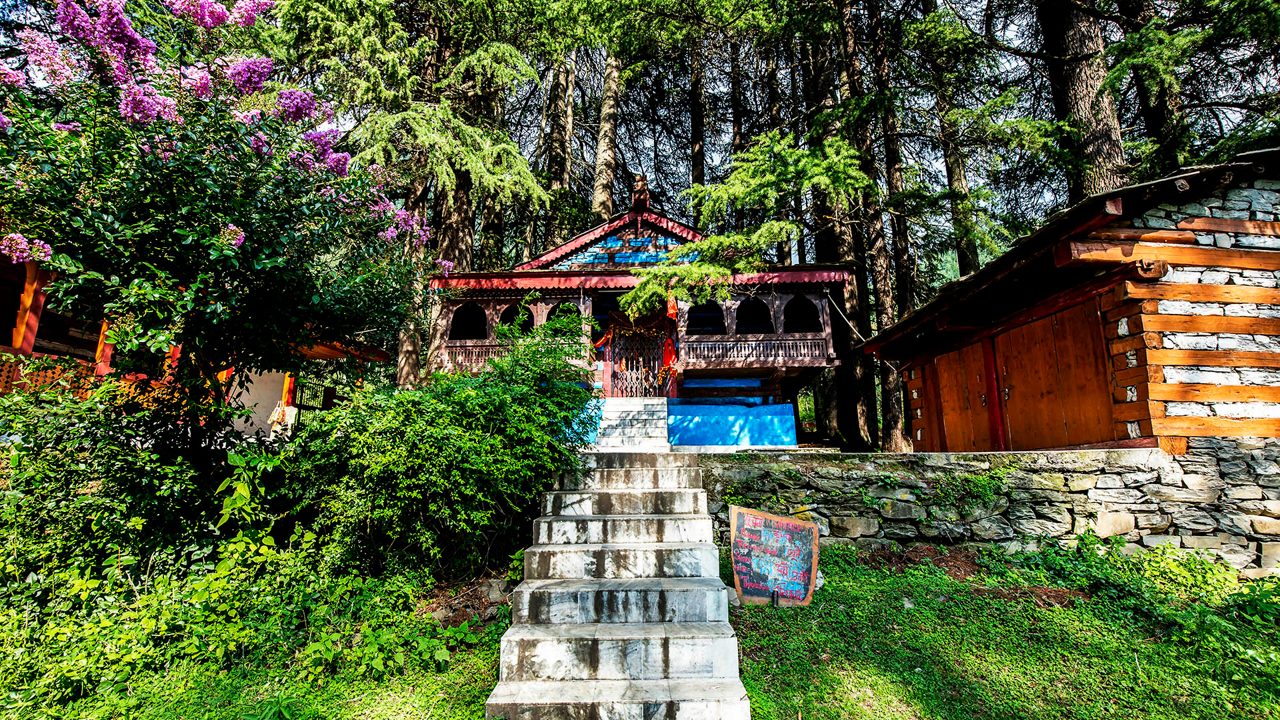
Naggar sits a short drive from Manali and reads like an entirely different place. Where Manali's centre has grown into a dense strip of hotels and traffic, Naggar is still a quiet hill village of orchards, deodar forest and a fifteenth-century castle, and the case for owning here is not that it will eventually catch up to Manali's tourist economy. It is that a buyer who wants that is looking in the wrong village.
Where it sits and how you get there
Naggar sits on the left bank of the Beas river, roughly 20 kilometres from Manali by road, at an altitude of around 6,700 feet. The drive climbs steadily out of the main Kullu-Manali valley floor, and the character of the place changes with it: fewer hotels, more apple orchards, and a noticeably quieter pace even during peak season, when Manali itself is at its most crowded. Being on the opposite bank from the main highway corridor is itself part of the reason Naggar has kept a slower pace while the destinations directly on that road absorbed most of the region's tourist growth.
What actually gives Naggar its character
Naggar was the capital of the Kullu kings for centuries before the seat moved to Sultanpur, and the physical evidence of that history is still standing. Naggar Castle, built in the fifteenth century, is one of the surviving examples of kath-kuni construction, alternating layers of stone and timber built without mortar, a genuinely distinct regional building method rather than a generic hill-station style. It passed to the British, was later restored, and now operates as a heritage stay under the Himachal Pradesh Tourism Development Corporation. A couple of kilometres above the castle sits the Nicholas Roerich Art Gallery, the former home of the Russian painter and explorer who settled in the Kullu Valley in 1929, and the gallery remains one of the more unusual cultural landmarks in this part of Himachal Pradesh precisely because nothing else nearby resembles it.
None of this is set dressing for a listing. It is the actual reason Naggar draws a different visitor than Manali does, someone looking for a place with genuine history and quiet rather than another version of the same tourist strip. The kath-kuni method itself is worth understanding on its own terms rather than as a curiosity: alternating timber and stone without mortar gives these structures a flexibility that performs better in this seismic zone than rigid masonry, which is part of why the technique persisted here for centuries rather than being replaced outright once other materials became available. A buyer drawn to the aesthetic of the region's older buildings is responding to something with a genuine functional basis, not just a picturesque style.
What owning here is actually like
The honest version of the investment case has to start with what Naggar is not. It is not a short-term rental market with Manali's volume of visitors passing through, and a buyer expecting Manali-level occupancy and turnover on a Naggar property is measuring it against the wrong benchmark. What it offers instead is a genuine second home in a historically significant, quiet setting, with tourism sufficient to support a property but not built around it the way Manali's centre now is. Is Manali a Good Investment in 2026? An Honest Take and Where to Buy in Manali: A Micro-Market Map cover the wider destination this locality sits inside, and Manali Property Price Trends and What Is Driving Them covers the pricing picture for the area as a whole, since specific current asking prices and active developments in Naggar itself change too quickly and too locally for a general guide to state responsibly; verifying those against current listings and a local advocate is the right move rather than relying on a figure fixed at the time this was written.
The Total Cost of Owning Property in Manali Over Ten Years is worth reading before treating any of this as purely a lifestyle decision, since a quieter locality does not mean a cheaper one to maintain.
Before you commit
Everything that applies to buying anywhere in Himachal Pradesh applies here without exception. Buying Property in Himachal Pradesh: What the Law Allows covers the state's outsider-purchase restriction in full, and Naggar's status as a quiet, less commercialised village does not exempt it from Section 118 or from the size limits and permission process that come with it; Section 118: Why Most Outsiders Cannot Buy Land in Himachal covers that restriction on its own terms. Himachal's Town and Country Planning Rules for Hill Plots covers what governs construction on a hill parcel here specifically, which matters in a village built on the kind of slope that makes Naggar's setting attractive in the first place. HP RERA: What a Hill-Station Project Registration Shows applies if the purchase sits inside a registered development rather than standalone land.
For a sense of the wider destination and the alternatives nearby, Manali, Old Manali, Naggar itself and Kasol show the range of character across this stretch of the Kullu Valley, from the busiest centre to the quietest village.
Sources
- Himachal Pradesh Tourism Development Corporation: Naggar Castle history and current operation as a heritage property
- General geographic and historical references on Naggar's location, altitude and history as the former capital of the Kullu kings
Ready to find your next holiday home?
Browse our curated collection of vacation homes and managed farmland across India and beyond.