Chikmagalur Through the Year: Coffee Bloom to Harvest
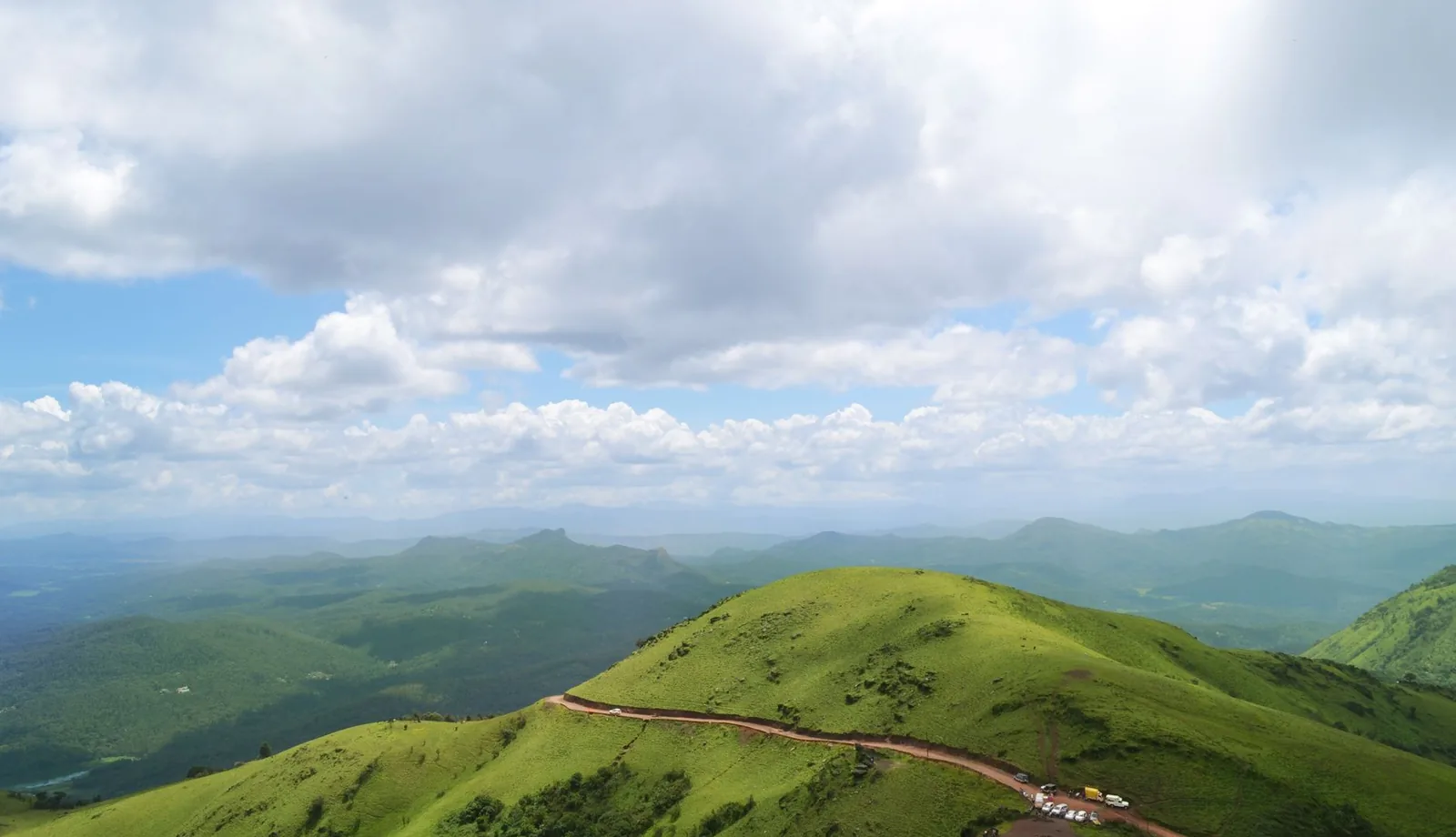
Ask about the best time to visit Chikmagalur and most answers collapse into one recommendation: October to February, when the skies clear and the hills turn cool. That window is real, but it is also the version of Chikmagalur every brochure already describes. The months nobody tells you about, the ones either side of it, are where the actual character of a coffee-growing hill district shows itself.
February to March: the blossom, and how brief it actually is
Coffee flowering here follows the rain, not the calendar. Blossom showers typically arrive from late February through mid-March, and it is that rainfall, not the date on its own, that triggers the district's Robusta plants, the dominant variety across Chikmagalur, into flower almost overnight. For a few days after a good blossom shower, entire hillsides of coffee turn white with flowers and the air carries a fragrance strong enough to notice before you can see the plants themselves. It is also genuinely brief: the flowers fall within about a week, so a trip timed to a specific week rather than a loose month is a real gamble, and the reward for getting the timing right is a sight that a trip planned around the standard October-to-February window will simply never see. Because the trigger is the shower itself rather than a fixed date, no calendar can promise the exact week in advance, and anyone planning around it should build in enough slack to shift a visit by several days rather than book against a single fixed date months ahead.
June to September: the monsoon most visitors skip, and what that misses
Chikmagalur's monsoon runs roughly June through September, heaviest in July and August, and it is exactly the stretch most travel advice tells you to avoid. What that advice misses is what the rain actually does to this specific landscape: waterfalls that are a modest trickle by December run full, the hills turn a green that the dry season cannot produce, and the working coffee estates, without a tourist season to perform for, look like what they actually are the rest of the year. The trade-off is real, roads can be difficult and outdoor plans need slack built in, but treating the monsoon as simply the season to skip misses the one stretch where the district looks the way it does on a coffee tin rather than the way it looks for photographs.
November to January: harvest, and the work behind the coffee
Harvest runs from November into January, and this is the season that turns the abstract idea of a coffee estate into something you can actually watch happen. Cherries are picked, pulped, and spread out to dry on raised beds in the sun, then sorted, and an estate stay timed to this window is the difference between seeing coffee as a backdrop and seeing the actual process a cup of filter coffee back home depended on. It is a working season rather than a leisure one for the estates themselves, and visitors who understand that going in tend to get more out of it than those expecting a purely scenic stopover. Some estate stays lean into this directly, building the visit around the harvest itself, while others run it in the background regardless of who is staying, and knowing which kind of stay you have booked changes what you should actually expect to see during the day.
So when is the actual best time to visit
It depends entirely on which of these three things you came for, and being honest about that is more useful than a single blanket answer. October through February is the safest recommendation because the weather cooperates and almost everything is accessible, which is exactly why it is also the most crowded and the least distinctive version of a Chikmagalur trip. The blossom window is spectacular and genuinely unpredictable by exact date. The monsoon rewards a visitor who wants the landscape at its most dramatic and is willing to plan around the rain rather than against it. None of these is objectively better than the others; they are different trips to the same place, and the mistake is assuming there is only one right answer rather than picking the version that matches what you actually want to see.
Is Chikmagalur a Good Investment in 2026? An Honest Take and Where to Buy in Chikmagalur: A Micro-Market Map cover the destination beyond a single visit, and A Long Weekend in Chikmagalur: Peaks, Estates and Filter Coffee pairs with this seasonal picture for anyone planning the trip itself rather than the investment case. Chikmagalur Property Price Trends and What Is Driving Them and The Total Cost of Owning Property in Chikmagalur Over Ten Years cover what owning here, rather than just visiting, actually involves. Coorg vs Chikmagalur vs Sakleshpur: The Karnataka Hill Comparison is worth reading if this seasonal picture has you weighing Chikmagalur against Coorg or Sakleshpur, Karnataka's other hill districts, and Hill Station or Coast? A Framework, Not an Answer covers the broader hill-versus-coast decision this destination sits inside. Karjat vs Alibaug vs Lonavala vs Mulshi: Where to Invest covers the equivalent comparison for buyers weighing Maharashtra's own hill and coastal options against a Karnataka hill district like this one.
Sources
- Industry reporting on blossom shower timing and Robusta flowering physiology in Karnataka's coffee-growing districts
- Karnataka coffee regions and pre-monsoon blossom shower timing
- Chikmagalur seasonal calendar: monsoon, winter and summer weather patterns
Ready to find your next holiday home?
Browse our curated collection of vacation homes and managed farmland across India and beyond.